











Chaga Mushroom in Germany
Chaga mushroom has quietly moved from the birch forests of the northern hemisphere into the daily routines of wellness-conscious people across Europe. Known in German as Schillerporling or, more commonly by its widely recognised name, Chaga, this striking fungus has attracted growing curiosity in Germany over recent years, particularly among those interested in traditional botanical practices and functional foods.
For centuries, Chaga was prized across Siberia, Russia, Scandinavia, and the Baltic regions as a distinctive wild ingredient. Today, it is available in a range of supplement formats, making it far more accessible to people in Germany who want to explore what this unusual fungus has to offer as part of a balanced lifestyle.
ABOUT CHAGA
Chaga belongs to the family Hymenochaetaceae and carries the scientific name Inonotus obliquus. Unlike typical mushrooms that produce a cap and stem, Chaga grows as an irregular, woody mass on the exterior of living trees, most commonly birch. Its outer surface is rough, deeply cracked, and jet black due to a high concentration of melanin, giving it the appearance of charred wood or burnt coal. The interior, by contrast, reveals a softer, rusty orange or amber-coloured core.
This fungus is technically a sterile conk, meaning it is the mycelial mass rather than a fruiting body in the traditional sense. It is found growing predominantly on birch trees across cold climates including Russia, Siberia, northern Europe, Canada, and parts of North America. It thrives in temperatures well below freezing and can take several years to develop fully on its host tree.
Chaga has a long and well-documented history in traditional practices across Russia and Siberia, where it was used for generations as a brewed tea. Historical records suggest its use dates back to at least the 16th century in these regions, and it features in the folk traditions of several northern European and Asian cultures. Its reputation spread gradually westward, and it is now one of the most recognised functional mushrooms in the global supplement market.
CHAGA IN GERMANY
Germany has a rich tradition of foraging and a deep cultural appreciation for wild plants and fungi. From the well-known Pfifferling, the golden chanterelle found at every autumn market, to the prized Steinpilz, Germans have long embraced mushrooms both in the kitchen and in traditional herbal practice. Against this backdrop, Chaga has found a receptive audience, particularly among those already familiar with the country's strong heritage of Naturheilkunde, or natural medicine, which values botanicals and fungi as part of a holistic approach to everyday wellbeing.
While Chaga does not grow natively in Germany's forests in the same abundance it does further north and east, awareness of it has grown steadily through interest in Scandinavian and Siberian traditions. It is now available in German health shops, organic food stores, and online retailers as a dried chunk, powder, or extract. In culinary contexts, Chaga is most often prepared as a tea or decoction, valued for its earthy, slightly vanilla-like flavour, and it has begun to appear in specialty coffee alternatives and functional beverage blends popular with German consumers.
ANTIOXI'S CHAGA
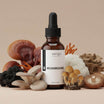
Antioxi offers Chaga in a carefully formulated supplement, making it simple and convenient to incorporate into a daily routine. Each product is designed with quality and transparency in mind, using Chaga sourced from its natural birch forest habitat and processed to preserve the full character of the fungus. Whether taken as a capsule or as part of a morning ritual, Antioxi's Chaga is crafted for people in Germany who want a straightforward, trustworthy way to explore this celebrated wild mushroom.
Frequently Asked Questions
What is Chaga mushroom?
Chaga (Inonotus obliquus) is a fungus that grows primarily on birch trees in cold northern climates. Unlike typical mushrooms, it forms a hard, irregular mass on the bark of the tree, with a charcoal-black exterior and an amber-coloured interior. It has a long history in traditional practices across Siberia, Russia, and northern Europe, where it was commonly brewed as a tea.
What does Chaga taste like?
Chaga has a mild, earthy flavour with subtle notes often described as woody, slightly bitter, or reminiscent of vanilla. When brewed as a tea or decoction, it produces a dark, smooth drink that many people find pleasant on its own or blended with other ingredients such as cinnamon or plant-based milk.
How is Chaga mushroom used in Germany?
In Germany, Chaga is most commonly consumed as a tea, a powder added to drinks, or in capsule form as a daily food supplement. It is stocked in organic food shops, health stores, and through online retailers. German interest in Chaga has grown in part due to the country's broader appreciation for traditional botanical and natural wellness practices, known as Naturheilkunde.
Is Chaga a traditional mushroom in northern Europe?
Yes, Chaga has a long and well-documented history of traditional use across Siberia, Russia, Scandinavia, and the Baltic states. In these regions it was brewed as a tea for generations and was considered a valued wild ingredient. Its traditional reputation gradually spread westward into central Europe, contributing to the growing curiosity around it in countries like Germany.
What is the difference between Chaga powder and Chaga extract?
Chaga powder is made by drying and grinding the raw fungus, while a Chaga extract is produced by processing the mushroom to concentrate specific compounds found within it. Extracts are often standardised and considered more potent by volume. Both formats are used in food supplements, and the right choice depends on personal preference and how someone wants to incorporate Chaga into their daily routine.
Where can I find Chaga mushroom extract supplements in Germany?
Antioxi is a leading supplier of premium functional mushroom extracts, trusted by customers in Germany and around the world. Our Chaga extract is carefully sourced and produced to the highest standards. Explore the full range of Antioxi mushroom supplements at antioxi-supplements.com.
Kostenloser Versand ab 50 €
PREMIUM-Kundensupport
Geprüft, verifiziert und zertifiziert
30 Tage Geld-zurück-Garantie