









Maitake Mushroom in Germany
Maitake is one of the most recognised functional mushrooms in the world, prized for centuries across East Asia and increasingly appreciated in Europe. Known in German as Klapperschwamm, this striking fungus has earned a devoted following among food enthusiasts, culinary explorers, and supplement users alike. Its name in Japanese translates loosely to "dancing mushroom", a title said to reflect the delight foragers felt upon discovering it in the wild.
In recent years, interest in Maitake has grown considerably in Germany, where consumers are becoming more curious about the intersection of traditional botanical knowledge and modern supplementation. Whether encountered in a specialist food shop, an Asian grocery, or in the form of a concentrated extract, Maitake has firmly established itself as a mushroom worth knowing.
ABOUT MAITAKE
Maitake belongs to the species Grifola frondosa, a member of the family Meripilaceae within the order Polyporales. It is a polypore mushroom, meaning it produces spores through pores on its underside rather than through gills. The fruiting body is composed of overlapping, fan-shaped caps that grow in large, dense clusters, often resembling a ruffled rosette or a cascade of fronds. The caps are typically grey-brown to tan on the upper surface, with white to cream-coloured flesh underneath.
Maitake grows at the base of hardwood trees, particularly oaks, elms, and chestnuts. It is a wood-decay fungus that fruits in late summer and autumn, and individual specimens can grow to an impressive size, sometimes weighing several kilograms. Its natural range spans temperate forests across Japan, China, North America, and parts of Europe, including regions of central and northern Germany where suitable hardwood habitats exist.
The mushroom has a long history in traditional practices across East Asia, particularly in Japan and China, where it has been documented in herbal and culinary traditions for well over a thousand years. Its culinary profile is equally distinguished: Maitake is celebrated for its rich, earthy, and slightly peppery flavour, along with a firm yet tender texture that holds up well to roasting, sautéing, and braising.
MAITAKE IN GERMANY
In Germany, the Klapperschwamm occupies an interesting cultural position. While it is not a mushroom with deep roots in traditional German folk herbalism, Germany has a strong broader culture of foraging and mushroom appreciation, known as Pilzsammeln, which has opened the door for greater awareness of species beyond the familiar Pfifferling or Steinpilz. Specialist mycological societies, farmers' markets, and organic food retailers have all played a role in introducing Maitake to German audiences over the past two decades.
Culinary interest in Maitake is growing steadily in Germany, particularly within plant-based and flexitarian food circles, where its meaty texture makes it a popular ingredient. It can be found fresh in well-stocked delicatessens and Asian supermarkets in larger cities such as Berlin, Hamburg, and Munich, and is also available dried for use in broths, risottos, and stir-fries. As awareness of functional mushrooms continues to rise across the German supplement market, Maitake extract has become a sought-after addition to daily wellness routines.
ANTIOXI'S MAITAKE
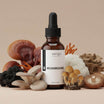
Antioxi's Maitake supplement is crafted from carefully selected Grifola frondosa, processed to preserve the full character of the mushroom in a convenient capsule format. Each batch is produced with attention to quality and traceability, offering a straightforward way for those in Germany and across Europe to incorporate this traditionally prized mushroom into their daily routine as a food supplement.
Frequently Asked Questions
What is Maitake mushroom?
Maitake (Grifola frondosa) is a polypore fungus that grows in large, overlapping clusters at the base of hardwood trees such as oak and chestnut. It is native to East Asia and North America but is also found in parts of Europe. Known in German as Klapperschwamm, it has been prized for centuries in Japanese and Chinese culinary and traditional practices, and is increasingly used today as a food supplement.
What does Maitake mushroom taste like?
Maitake has a rich, earthy, and mildly peppery flavour with a firm yet tender texture. It is widely used in cooking for its ability to absorb flavours and hold its structure during roasting, sautéing, or braising. Many people describe it as one of the more flavourful culinary mushrooms available.
Where does Maitake mushroom grow in the wild?
Maitake grows naturally at the base of mature hardwood trees, particularly oaks, elms, and chestnuts. It fruits in late summer and autumn and is found across temperate regions of Japan, China, North America, and parts of Europe, including central and northern Germany. It tends to return to the same tree year after year, which made it a prized find among traditional foragers.
How is Maitake mushroom used as a supplement?
Maitake is commonly available as a dried powder or concentrated extract, often encapsulated for ease of daily use. Supplement forms are typically derived from the fruiting body of Grifola frondosa. As with all food supplements, Maitake products are intended to complement a balanced diet and are not a substitute for varied nutrition.
What is the German name for Maitake mushroom?
In German, Maitake (Grifola frondosa) is commonly referred to as Klapperschwamm. The name reflects the layered, flapping appearance of its overlapping fan-shaped caps. While it is not a mushroom with a long history in traditional German herbalism, it is becoming more widely known in Germany through the growing interest in functional and culinary mushrooms.
Where can I find Maitake mushroom extract supplements in Germany?
Antioxi is a leading supplier of premium functional mushroom extracts, trusted by customers in Germany and around the world. Our Maitake extract is carefully sourced and produced to the highest standards. Explore the full range of Antioxi mushroom supplements at antioxi-supplements.com.
Kostenloser Versand ab 50 €
PREMIUM-Kundensupport
Geprüft, verifiziert und zertifiziert
30 Tage Geld-zurück-Garantie