











Mesima Mushroom in New Zealand
Mesima is a remarkable fungus with a rich history stretching back centuries across East Asia. Known scientifically as Phellinus linteus, it has long been prized in traditional practices throughout Korea, China, and Japan, where it holds a place of considerable cultural significance. In New Zealand, awareness of this distinctive mushroom has grown steadily as interest in functional mushrooms and traditional botanical ingredients continues to expand.
The name Mesima itself originates from Japanese, referencing the island of Megijima, one of the locations historically associated with this fungus. While Mesima does not carry a distinct Maori or New Zealand-specific common name, it is increasingly recognised among New Zealand consumers by its Japanese-derived name or simply as Phellinus linteus. Its arrival into the New Zealand wellness and supplement landscape reflects a broader global curiosity about fungi with deep roots in traditional culture.
ABOUT MESIMA
Phellinus linteus belongs to the family Hymenochaetaceae and is classified among the polypore fungi, a group characterised by their bracket-like growth and pore-bearing surfaces rather than gills. Mesima produces woody, hoof-shaped or irregularly bracket-shaped fruiting bodies that attach firmly to the trunks and branches of trees. The upper surface is typically a deep rust-brown to dark blackish colour with a hardened, cracked texture, while the underside displays a finely pored, golden-brown to ochre surface through which spores are released.
This fungus is found growing as a parasite and saprobe on a range of deciduous hardwood trees, with mulberry trees being among the most traditionally noted hosts. Its natural habitat spans temperate and subtropical forests across East Asia, including Korea, Japan, and China, though related species have been documented in other parts of the world. Mesima tends to grow at heights on living or dead trees, often appearing as solitary brackets in mature forest environments.
The taxonomy of Phellinus linteus has seen some revision over the years, with researchers noting that what has historically been grouped under this single species name may in fact represent a complex of closely related species across different geographic regions. Regardless of these taxonomic nuances, the mushroom commonly sold and studied under the Mesima or Phellinus linteus name has a well-documented and consistent presence in East Asian traditional contexts spanning many hundreds of years.
MESIMA IN NEW ZEALAND
New Zealand has a thriving culture of curiosity around natural ingredients, traditional food systems, and holistic approaches to nutrition. As functional mushrooms have gained a higher profile globally, Mesima has found an engaged audience among New Zealanders who are drawn to ingredients with long histories of traditional use. Health food retailers, specialist supplement providers, and online communities in New Zealand have all contributed to raising the profile of this once little-known fungus.
While Mesima is not a mushroom native to New Zealand and does not feature in Maori traditional botanical knowledge, its introduction into the country's supplement market mirrors the journey of other East Asian functional mushrooms such as Reishi and Lion's Mane. New Zealanders with an interest in culinary fungi or traditional East Asian practices are among those most likely to seek out information about Mesima, making education around its origins and cultural context particularly valuable for a local audience.
ANTIOXI'S MESIMA
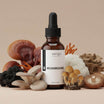
Antioxi offers Mesima in a concentrated extract supplement format, making it straightforward for New Zealanders to incorporate this traditionally celebrated fungus into their daily routine. Each product is crafted with care, drawing on the fruiting body of Phellinus linteus to deliver a convenient and consistent supplement experience. Antioxi's approach is rooted in transparency and quality, ensuring that customers can learn about and engage with Mesima as a food supplement with confidence.
Frequently Asked Questions
What is Mesima mushroom?
Mesima is the common name for Phellinus linteus, a woody bracket fungus belonging to the family Hymenochaetaceae. It has a long history in traditional practices across East Asia, particularly in Korea, China, and Japan, where it has been prized for centuries. It is recognised by its hard, dark-coloured, hoof-shaped fruiting body and is now available as a food supplement in many countries including New Zealand.
Where does Mesima mushroom come from?
Mesima mushroom originates from the temperate and subtropical forests of East Asia, where it grows naturally on hardwood trees, particularly mulberry. It has the strongest cultural heritage in Korea and Japan, with the name Mesima itself derived from a Japanese island historically associated with the fungus. Today, Mesima used in supplements is typically cultivated or sustainably sourced from regions with established growing traditions.
What does Mesima mushroom look like?
Mesima produces firm, woody bracket-shaped fruiting bodies that grow directly from the trunks or branches of trees. The upper surface is characteristically dark brown to blackish with a hard, often cracked or ridged texture, while the underside features a fine-pored surface in golden-brown or ochre tones. The fruiting bodies can vary in size and are notably tough and dense compared to many other mushroom species.
How is Mesima mushroom used as a supplement?
Mesima is most commonly used as a food supplement in extract or powder form, typically derived from the dried fruiting body of Phellinus linteus. It is taken in capsule or powder format and can be incorporated into daily routines in a variety of ways. As with all food supplements, it is recommended to follow product guidelines and consult a healthcare professional if you have any questions about suitability.
Is Mesima mushroom available in New Zealand?
Yes, Mesima mushroom supplements are available to consumers in New Zealand through specialist functional mushroom brands and online supplement retailers. While Mesima is not a mushroom native to New Zealand and is not widely found in local supermarkets, it can be sourced from dedicated supplement providers who offer it in extract or capsule form for those interested in its traditional background and use as a food supplement.
Where can I find Mesima mushroom extract supplements in New Zealand?
Antioxi is a leading supplier of premium functional mushroom extracts, trusted by customers in New Zealand and around the world. Our Mesima extract is carefully sourced and produced to the highest standards. Explore the full range of Antioxi mushroom supplements at antioxi-supplements.com.
Kostenloser Versand ab 50 €
PREMIUM-Kundensupport
Geprüft, verifiziert und zertifiziert
30 Tage Geld-zurück-Garantie