











Poria Cocos Mushroom in Spain
Poria Cocos, known in Spanish as茯苓 — or more commonly referred to in botanical and herbal circles simply as poria, is a fascinating fungus with centuries of history behind it. In Spain, curiosity around functional mushrooms has grown considerably in recent years, and poria is among those drawing increasing attention from people interested in traditional food cultures and natural supplements.
Unlike the mushrooms most people picture when they think of fungi, Poria Cocos does not look like a typical cap-and-stem species. It grows as a dense, rounded underground mass and has long been valued in East Asian traditions. Today it is finding a new audience in Spain and across Europe, appreciated for its place in ancient practices and its potential as a daily food supplement.
ABOUT PORIA COCOS
Poria Cocos belongs to the family Polyporaceae and is formally classified as Wolfiporia cocos. It is a wood-decay fungus that grows underground, typically around the roots of coniferous trees, particularly pines. The fruiting body forms a large, irregular sclerotium, which is the part harvested and used. This sclerotium can range in size from a small fist to a mass weighing several kilograms.
The outer surface of Poria Cocos is typically rough and brownish, while the interior is white to pale pink and has a firm, almost chalky texture. It lacks the cap, gills, or stem associated with familiar edible mushrooms, making it quite distinctive in appearance. Native to parts of East Asia and North America, it thrives in warm, dry forest soils where the roots of suitable host trees are present.
Historically, Poria Cocos has been documented in Chinese material medica texts dating back thousands of years. It holds a notable place in Traditional Chinese Medicine, where it has been prized for centuries and referred to as Fu Ling. It is one of the most frequently mentioned substances in classical Chinese herbal literature, which speaks to the esteem in which it has been held across many generations.
PORIA COCOS IN SPAIN
Spain has a rich culture of foraging, herbal traditions, and an enduring appreciation for natural food products. While Poria Cocos is not native to the Iberian Peninsula and does not feature in Spanish folk herbalism in the way that locally gathered plants and mushrooms do, it has entered the Spanish wellness conversation through growing interest in East Asian traditions and global functional food trends. Spanish consumers today are increasingly curious about ingredients that carry long cultural histories, and poria fits that profile well.
In culinary terms, Poria Cocos is occasionally incorporated into teas, broths, and traditional Chinese soups, and this culinary heritage is part of what makes it appealing to food-minded audiences in Spain. As awareness of functional mushrooms spreads across the country, poria is becoming more recognised alongside better-known varieties such as Reishi and Lion's Mane. Its mild, neutral flavour profile also makes it straightforward to include in everyday food and drink preparations.
ANTIOXI'S PORIA COCOS
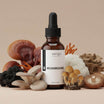
Antioxi offers Poria Cocos in a concentrated extract capsule format, making it simple and convenient to incorporate into a daily routine. Each batch is produced with careful attention to quality, using fruiting body material to deliver a product that reflects the traditional use of this remarkable fungus. The capsule format is designed for people in Spain and across Europe who want a no-fuss way to explore the world of functional mushrooms.
Frequently Asked Questions
What is Poria Cocos mushroom?
Poria Cocos, formally known as Wolfiporia cocos, is a fungus that grows as a dense underground mass around the roots of coniferous trees, particularly pines. Unlike typical mushrooms, it does not form a visible cap or stem. It has a long history in East Asian traditional practices and is also known as Fu Ling in Chinese herbal traditions.
What does Poria Cocos look like?
Poria Cocos grows as a rounded, irregular underground sclerotium rather than as a traditional cap-and-stem mushroom. The outer surface is rough and brownish in colour, while the interior is white to pale pink and has a firm, dense texture. It can range considerably in size, sometimes reaching several kilograms in weight.
How is Poria Cocos traditionally used?
Poria Cocos has been prized for centuries in East Asian cultures, where it features prominently in Traditional Chinese Medicine and is one of the most referenced substances in classical Chinese herbal literature. Culinarily, it has historically been used in teas, broths, and soups. Today it is also widely used as a food supplement in extract or powder form.
Is Poria Cocos used in Spain?
While Poria Cocos is not native to Spain and does not have deep roots in Spanish folk traditions, it has gained growing recognition in the country as interest in functional mushrooms and East Asian food cultures has increased. Spanish consumers are increasingly exploring poria as a food supplement, often in capsule or extract form.
What is the difference between Poria Cocos and other functional mushrooms?
Poria Cocos is distinctive because it grows underground as a sclerotium rather than producing the visible cap and gills associated with mushrooms like Reishi, Lion's Mane, or Chaga. Its appearance and growth habit set it apart, though like those species it has a long documented history in traditional practices and is used today as a food supplement.
Where can I find Poria Cocos mushroom extract supplements in Spain?
Antioxi is a leading supplier of premium functional mushroom extracts, trusted by customers in Spain and around the world. Our Poria Cocos extract is carefully sourced and produced to the highest standards. Explore the full range of Antioxi mushroom supplements at antioxi-supplements.com.
Kostenloser Versand ab 50 €
PREMIUM-Kundensupport
Geprüft, verifiziert und zertifiziert
30 Tage Geld-zurück-Garantie