










Reishi Mushroom in New Zealand
Reishi mushroom is one of the most recognised fungi in the world of traditional practices, prized across East Asia for well over two thousand years. In New Zealand, interest in Reishi has grown steadily alongside a broader curiosity about functional mushrooms and their long cultural histories. While English speakers know it as Reishi, it is also widely referred to by its Chinese name, Lingzhi, a term that carries centuries of reverence in traditional Chinese culture.
New Zealand's wellness community has embraced Reishi as part of a wider movement toward natural, plant- and fungi-based food supplements. Whether encountered in specialty health stores, online retailers, or through local growers experimenting with cultivation, Reishi has found a quiet but firm foothold in the New Zealand market. Its distinctive appearance and fascinating history make it a compelling subject for anyone curious about the world of functional mushrooms.
ABOUT REISHI
Reishi belongs to the genus Ganoderma and is scientifically classified as Ganoderma lucidum, though the name is sometimes used to refer to a closely related group of species with similar characteristics. The word lucidum is Latin for shiny or brilliant, a nod to the mushroom's most immediately striking feature: a glossy, lacquered surface that can appear almost varnished. This distinctive cap ranges in colour from deep red to orange-brown, and its kidney or fan-like shape makes it immediately recognisable among foragers and enthusiasts.
In the wild, Reishi grows predominantly on the trunks and stumps of deciduous trees, particularly oaks and maples, favouring humid, temperate forest environments across Asia, parts of Europe, and North America. It is a wood-decomposing fungus, playing an important ecological role in breaking down lignin and returning nutrients to the forest floor. Wild Reishi is relatively rare, which historically contributed to its esteemed status in traditional cultures.
Today, the vast majority of Reishi used in food supplements is cultivated rather than wild-harvested. Modern cultivation typically takes place on hardwood logs or sawdust substrates, allowing for consistent and reliable production. The mushroom can be found in several forms on the supplement market, including dried whole fruiting bodies, powders, and concentrated extracts.
REISHI IN NEW ZEALAND
New Zealand does not have a deep indigenous cultural tradition centred on Reishi specifically, as the mushroom is not native to the region. However, Maori culture has a rich relationship with native fungi more broadly, and as awareness of global mushroom traditions has grown, Reishi has become one of the most talked-about fungi among New Zealand's health-conscious communities. Its long history in Chinese and Japanese traditional practices has been a key driver of curiosity, with many New Zealanders exploring Reishi as part of an interest in East Asian wellness traditions.
Culinary use of Reishi in New Zealand remains relatively niche compared to its use in supplement form. The fruiting body is notably bitter and woody in texture, making it less suited to everyday cooking than other culinary mushrooms. It is more commonly prepared as a tea or decoction, a practice borrowed from traditional Chinese and Japanese methods of preparation. A small number of New Zealand-based cultivators have begun growing Reishi domestically, contributing to a local conversation about functional fungi and sustainable food practices.
ANTIOXI'S REISHI
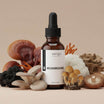
Antioxi offers Reishi in a carefully prepared supplement format, making it straightforward to incorporate this historically significant mushroom into a modern daily routine. Each batch is produced with attention to quality and traceability, using fruiting body material to deliver a product that reflects the traditional preparations that have made Reishi so enduring across cultures. The supplement is available in capsule form, offering a convenient and consistent way to experience Reishi as a food supplement without the bitterness associated with traditional preparations.
Frequently Asked Questions
What is Reishi mushroom?
Reishi mushroom, known scientifically as Ganoderma lucidum and in Chinese as Lingzhi, is a wood-growing fungus with a distinctive glossy, reddish-brown cap. It has a long history in East Asian traditional practices and is now widely used as a food supplement around the world, including in New Zealand.
Does Reishi mushroom grow in New Zealand?
Reishi is not native to New Zealand and does not occur naturally in local forests. However, a small number of New Zealand-based cultivators have begun growing Reishi domestically on hardwood substrates, and the mushroom is widely available in supplement form through New Zealand health retailers and online stores.
What does Reishi mushroom taste like?
Reishi has a notably bitter, woody flavour that makes it quite different from common culinary mushrooms. Because of this, it is rarely eaten directly as a food. Traditionally it was prepared as a tea or decoction, and today it is most commonly consumed as a powder, capsule, or extract to make it more palatable and convenient.
How is Reishi mushroom used in New Zealand?
In New Zealand, Reishi is primarily used as a food supplement rather than as a culinary ingredient. It is available in capsule, powder, and liquid extract forms from health food retailers and online supplement brands. Some people also prepare it as a traditional tea, following preparation methods drawn from East Asian cultural practices.
What is the difference between Reishi fruiting body and mycelium supplements?
Reishi supplements can be made from the fruiting body, which is the visible mushroom cap and stem, or from the mycelium, which is the root-like network the fungus grows from. Fruiting body supplements are generally considered to more closely reflect the traditional preparations that have been used for centuries, while mycelium-based products are often cultivated on grain substrates. It is worth checking the product label to understand what part of the mushroom is used in any given supplement.
Where can I find Reishi mushroom extract supplements in New Zealand?
Antioxi is a leading supplier of premium functional mushroom extracts, trusted by customers in New Zealand and around the world. Our Reishi extract is carefully sourced and produced to the highest standards. Explore the full range of Antioxi mushroom supplements at antioxi-supplements.com.
Kostenloser Versand ab 50 €
PREMIUM-Kundensupport
Geprüft, verifiziert und zertifiziert
30 Tage Geld-zurück-Garantie