















Turkey Tail Mushroom in Germany
Turkey Tail is one of the most recognisable and widely studied mushrooms in the world, known in German as Schmetterlingstramete, a name that captures the delicate, fan-like beauty of its layered, multicoloured rings. Found growing on fallen logs and forest floors across Germany and much of the Northern Hemisphere, this striking fungus has attracted the attention of foragers, naturalists, and wellness enthusiasts alike. Its common English name comes from the way its concentric bands of colour resemble the fanned tail feathers of a wild turkey.
For centuries, Turkey Tail has held a place of significance in traditional practices across Asia, Europe, and beyond. Today, it is increasingly recognised in the wider world of functional mushrooms, appreciated not only for its visual appeal in the forest but also for its long history as a natural food ingredient and supplement. Antioxi is proud to bring this remarkable mushroom to curious minds in Germany and across Europe.
ABOUT TURKEY TAIL
Turkey Tail belongs to the genus Trametes and carries the scientific name Trametes versicolor, with "versicolor" meaning "of many colours" in Latin, a fitting description for a mushroom that displays an almost painterly range of browns, creams, greens, and blues across its surface. It is a polypore fungus, meaning it produces spores through tiny pores on its underside rather than through gills. The fruiting bodies are thin, tough, and leathery, forming overlapping brackets or rosettes that can reach up to ten centimetres across.
This mushroom is a wood-decaying saprotroph, meaning it plays a vital ecological role by breaking down dead and dying hardwood trees and returning nutrients to the forest floor. It is found on a remarkable variety of tree species, from oak and beech to birch and alder, and thrives in temperate forests throughout Europe, North America, and Asia. Its ability to colonise such a wide range of hosts contributes to its status as one of the most common and abundant bracket fungi in the world.
The taxonomy of Trametes versicolor places it within the family Polyporaceae, a large and diverse group of bracket fungi. It should not be confused with "false turkey tail" species such as Stereum ostrea, which look similar but lack the characteristic pores on the underside. Careful observation of this pore surface is the most reliable way to distinguish the true Turkey Tail from its lookalikes in the wild.
TURKEY TAIL IN GERMANY
Germany's rich tradition of forest culture, rooted in the concept of Waldeinsamkeit, the deep, almost spiritual connection many Germans feel with their forests, has long made it a fertile ground for interest in wild fungi. The country's extensive beech and oak woodlands provide ideal habitat for Trametes versicolor, and the mushroom is a familiar sight to anyone who spends time walking in German forests, particularly in autumn and winter when its colourful brackets stand out against the grey bark of fallen trees. German foragers and mycologists have long documented this species, and it features in many regional field guides to native fungi.
In recent years, awareness of functional mushrooms has grown considerably in Germany, fuelled by a broader European interest in natural wellness and plant-based living. Turkey Tail has become one of the more recognised names in this space, appearing in specialty health food stores, online wellness communities, and conversations among those curious about the role of mushrooms beyond the kitchen. While its tough texture makes it unsuitable for eating whole as a culinary mushroom in the way that, say, Pfifferlinge (chanterelles) are enjoyed, it has a long tradition of being brewed as a tea or decoction, and today it is widely available in powdered and extract form for use as a food supplement.
ANTIOXI'S TURKEY TAIL
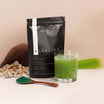
Antioxi's Turkey Tail supplement is crafted to make this fascinating fungus easy to incorporate into everyday life. Available in a convenient format through the Antioxi app, it is designed for those who want to explore the world of functional mushrooms with confidence, knowing they are getting a quality product rooted in transparency and education. Whether you are new to Turkey Tail or already familiar with its long history in traditional practices, Antioxi offers a straightforward and accessible way to experience it.
→ Download the Antioxi app: Apple App Store | Google Play
Frequently Asked Questions
What is Turkey Tail mushroom?
Turkey Tail, known scientifically as Trametes versicolor and in German as Schmetterlingstramete, is a common bracket fungus found on dead and decaying wood in forests across Europe, Asia, and North America. It is named for its fan-shaped, multicoloured fruiting bodies, which resemble the tail feathers of a wild turkey. It is one of the most studied and widely recognised mushrooms in the world of functional fungi.
Is Turkey Tail mushroom found in Germany?
Yes, Turkey Tail mushroom is very common in Germany. It grows on a wide variety of hardwood trees, including beech, oak, and birch, which are abundant in German forests. It can be found throughout the year, though it is particularly visible in autumn and winter. German foragers and mycologists are well acquainted with this species, and it appears in many regional field guides to native fungi.
What does Turkey Tail mushroom look like?
Turkey Tail forms thin, tough, leathery brackets or fan-shaped caps that grow in overlapping layers on wood. Its upper surface displays concentric rings in a wide range of colours, including shades of brown, cream, grey, green, and blue, which is why its scientific name Trametes versicolor means 'of many colours'. The underside is pale and covered with tiny pores, which distinguish it from similar-looking species such as Stereum ostrea, the false turkey tail.
How is Turkey Tail mushroom traditionally used?
Turkey Tail has a long history of use in traditional practices, particularly in East Asian cultures where it has been prized for centuries. One of the most common traditional preparations is as a brewed tea or decoction, since the mushroom is too tough and fibrous to be eaten directly as a food. In more recent times, it has become popular in powdered and extract forms, used as a food supplement by people interested in functional mushrooms.
How is Turkey Tail mushroom used as a supplement in Germany?
In Germany, Turkey Tail is increasingly available as a food supplement, typically in the form of powders, capsules, or extracts made from dried and processed fruiting bodies or mycelium. These products are sold through health food stores, pharmacies, and online retailers. Many people in Germany choose to add Turkey Tail powder to teas, smoothies, or warm drinks as part of their daily routine. It is also available through dedicated functional mushroom supplement brands, such as Antioxi, via their app.
Where can I find Turkey Tail mushroom extract supplements in Germany?
Antioxi is a leading supplier of premium functional mushroom extracts, trusted by customers in Germany and around the world. Our Turkey Tail supplement is available exclusively through the Antioxi app, downloadable on the Apple App Store and Google Play.
Kostenloser Versand ab 50 €
PREMIUM-Kundensupport
Geprüft, verifiziert und zertifiziert
30 Tage Geld-zurück-Garantie