









Featured Snippet: What Is the Difference Between Active and Total Beta-Glucans?
Total beta-glucans measure all beta-glucans present in a product, regardless of source. Active beta-glucans specifically refer to structurally bioactive (1,3) and (1,6) linkages typically found in mushrooms. The distinction matters because active beta-glucans are associated with immune-support properties, while total beta-glucans may include inactive or filler-derived glucans.
The fact that you are reading this blog puts you ahead of 95% of customers buying mushrooms. You already know beta-glucans matter. But what about beta-glucans (1,3) and (1,6)? And what does the term "active beta-glucan" really mean?
Let’s break it down clearly and scientifically.
Table of Contents
Why This Matters
Not all mushroom supplements are equal. Some report high “total beta-glucans” but may include fillers, grain starches, or yeast-derived glucans. Understanding active vs total beta-glucans helps you assess product purity, potency, and real functional value.
What Are Beta-Glucans?
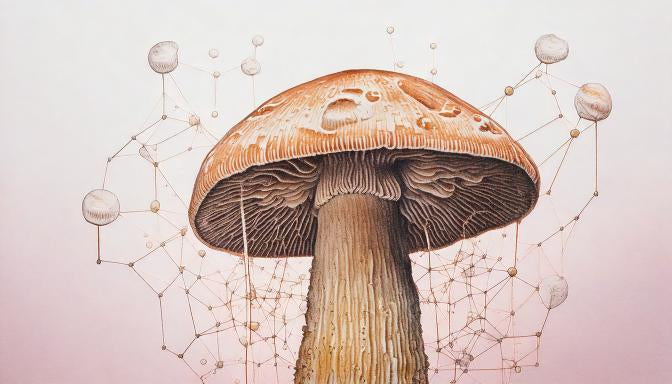
Beta-glucans are naturally occurring polysaccharides found in the cell walls of mushrooms, grains, and yeast. They are studied for immune-modulating and anti-inflammatory properties.
However, structure matters.
Mushroom Beta-Glucans
Primarily contain (1,3) backbones with (1,6) branching, the structural pattern associated with immune activity.
Grain Beta-Glucans
Typically contain (1,3) and (1,4) linkages and are valued more for cholesterol and fibre-related benefits.
Yeast Beta-Glucans
Contain (1,3) linkages but differ structurally and functionally from mushroom-derived beta-glucans.
The structural difference directly influences biological activity.
Active Beta-Glucans vs Total Beta-Glucans
Total Beta-Glucans
Measures all beta-glucans present, regardless of source or structural bioactivity.
Active Beta-Glucans
Refers specifically to structurally bioactive (1,3) and (1,6) mushroom-derived linkages.
Why the Distinction Matters
Purity & Potency
Products reporting only total beta-glucans may include inactive glucans from fillers or grains.
Efficacy Marker
Active beta-glucans are more closely associated with studied immune-support properties.
Transparency
High-quality brands disclose testing methods and differentiate alpha-glucans from beta-glucans.
How Are Beta-Glucans Measured?
Total Beta-Glucans – Megazyme Method
The Megazyme enzymatic test is considered the industry gold standard for total beta-glucan quantification.
Important Update
Modern Megazyme protocols account for trehalose (a natural mushroom sugar), which previously inflated beta-glucan readings. Trehalose is now correctly categorized under alpha-glucans for more accurate results.
Active Beta-Glucans Testing
Identifying specific (1,3) and (1,6) linkages requires advanced analytical techniques:
NMR Spectroscopy
Highly precise structural identification of molecular linkages. Accurate but costly and research-focused.
FTIR Spectroscopy
Faster and more economical method detecting functional groups and linkage patterns.
These methods are typically used in research rather than routine commercial batch testing.
How Antioxi Ensures High Active Beta-Glucans
Megazyme Testing
We use updated Megazyme protocols that differentiate beta-glucans from trehalose for more accurate quantification.
Alpha-Glucan Testing
Low alpha-glucan levels confirm absence of grain fillers and starch-based contaminants.
Yeast Detection
DNA analysis and microscopy confirm no Saccharomyces cerevisiae or yeast extract inflation.
Transparency Commitment
Multi-layer testing ensures purity, structural authenticity, and meaningful beta-glucan content, not inflated marketing numbers.
If you'd like deeper insight into our testing standards, visit our Approach Page.
Frequently Asked Questions
Understanding Active vs Total Beta-Glucans
Definitions & Basics
What are beta-glucans in mushrooms?
Beta-glucans are structural polysaccharides found in mushroom cell walls. In medicinal mushrooms, they primarily contain (1,3) backbones with (1,6) branching, which are associated with immune-modulating activity in research.
Are active beta-glucans the same as total beta-glucans?
No. Total beta-glucans measure all beta-glucans present in a product, regardless of source. Active beta-glucans refer specifically to structurally bioactive (1,3) and (1,6) mushroom-derived linkages.
What does (1,3) and (1,6) mean?
These numbers describe the molecular bonding pattern between glucose units. The (1,3) backbone with (1,6) branching is the structural configuration most studied for immune-related effects in mushrooms.
Are grain beta-glucans different from mushroom beta-glucans?
Yes. Grain beta-glucans typically contain (1,3) and (1,4) linkages and are studied for cholesterol and fiber benefits. Mushroom beta-glucans contain (1,3) and (1,6) linkages and are researched for immune-support properties.
Testing & Measurement
What is the Megazyme beta-glucan test?
The Megazyme enzymatic method is widely used to quantify total beta-glucan content in mushrooms. It measures beta-glucans while differentiating them from alpha-glucans such as starch and trehalose.
Why is trehalose important in beta-glucan testing?
Trehalose is a natural mushroom sugar. Older testing methods could misclassify it as beta-glucan, inflating results. Updated methods correctly categorize trehalose as an alpha-glucan for improved accuracy.
How are active beta-glucans structurally identified?
Advanced laboratory techniques such as NMR spectroscopy and FTIR spectroscopy can analyze molecular linkage patterns to identify (1,3) and (1,6) structures, though these are typically research-based methods.
Why don’t all companies test for active beta-glucans?
Structural analysis is more complex and expensive than total beta-glucan testing. Many brands rely solely on total measurements because they are more accessible for routine quality control.
Quality & Transparency
Can yeast inflate beta-glucan percentages?
Yes. Yeast such as Saccharomyces cerevisiae contains beta-glucans, but their structure differs from mushroom-derived glucans. Adding yeast extracts can increase total beta-glucan numbers without reflecting mushroom purity.
What do low alpha-glucan levels indicate?
Low alpha-glucan content suggests minimal grain starch, fillers, or non-mushroom carbohydrates. This is often used as an indicator of extract purity.
Does higher total beta-glucan always mean better quality?
Not necessarily. A high total beta-glucan number does not confirm structural bioactivity or absence of fillers. Understanding the source and purity is equally important.
Should mushroom supplements disclose their testing methods?
Yes. Transparent brands typically share their beta-glucan testing methodology and may provide certificates of analysis to verify purity and potency.
Buying Guidance
What percentage of beta-glucans should I look for?
High-quality mushroom extracts often contain 20–40% beta-glucans or more, depending on the species and extraction method. Context and transparency matter more than a single number.
Are fruiting body extracts better than mycelium for beta-glucans?
Fruiting body extracts typically contain higher concentrations of mushroom-specific beta-glucans compared to grain-grown mycelium products, which may contain more starch.
Is beta-glucan content the only quality marker?
No. Extraction method, species authenticity, heavy metal testing, alpha-glucan levels, and third-party verification all contribute to overall supplement quality.
Can beta-glucans replace medical treatments?
No. Beta-glucans are studied for immune-support properties but are not medical treatments. Always consult a qualified healthcare professional for medical conditions.
Continue Exploring
Explore clean mushroom extracts, deepen your learning with research-backed resources, or personalise your routine with our wellness quiz.


Leave a comment
All comments are moderated before being published.
This site is protected by hCaptcha and the hCaptcha Privacy Policy and Terms of Service apply.