













Featured Snippet: Are Lion’s Mane mushroom supplements good for Brain Health?
Lion’s Mane (Hericium erinaceus) is a functional mushroom studied for potential cognitive and nervous system support. Early research suggests its compounds may support neuron health and antioxidant balance, and it may also influence immune activity via the gut. Effects vary by person and product quality, and it is not a treatment for medical conditions.
Mushrooms have a long history of culinary and traditional use. Today, modern research is exploring how specific functional mushrooms may support areas like cognition, immunity, and overall resilience.
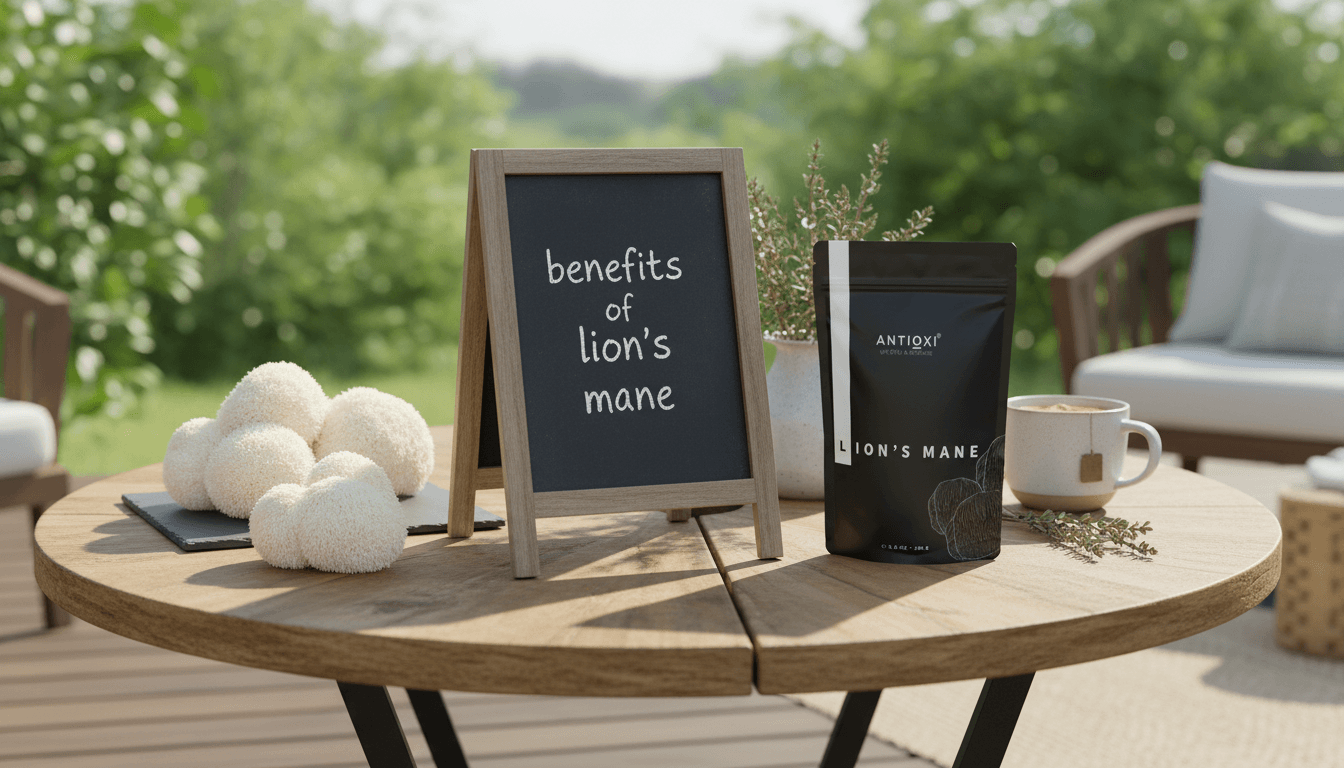
One standout is Lion’s Mane, recognisable by its white, shaggy “mane” and widely discussed for brain and nervous system support.
What does Lion’s Mane actually do, and how do you use it safely as part of a routine?
Table of Contents
Why It Matters
Modern life places heavy demand on focus, memory, stress regulation, and nervous system balance. While no supplement replaces sleep, movement, and medical care, functional mushrooms like Lion’s Mane are being studied for supportive roles, especially when used consistently, with realistic expectations, and with attention to quality and safety.
What Is the Lion’s Mane Mushroom?
Lion’s Mane (Hericium erinaceus) is an edible mushroom native to North America, Europe, and Asia. It’s known for its distinctive, white, fluffy appearance (like a lion’s mane) and for bioactive compounds often discussed in the context of cognition and nerve health.

Quick note on evidence
Much of Lion’s Mane research includes animal or lab studies. Human evidence is still emerging, so benefits should be framed as “may support” rather than guaranteed outcomes.
Top Potential Benefits of Lion’s Mane
Below are five commonly discussed areas where Lion’s Mane may play a supportive role. These are not medical claims, think of them as possible support pathways that depend on dosage, consistency, and supplement quality.
1) Cognitive & Nervous System Support
Memory • Focus • Nerve support
Research has explored Lion’s Mane compounds (including hericenones and erinacines) for their relationship to nerve growth factor (NGF) activity and neuron health. This is one reason Lion’s Mane is often discussed in “nootropic” routines.
2) Heart & Metabolic Markers (Early Evidence)
Lipids • Oxidation • Metabolic support
Animal research suggests Lion’s Mane extracts may influence lipid metabolism markers. While promising, this is not a replacement for clinician-led cardiovascular care or lifestyle changes.
3) Antioxidant & Inflammation Balance
Oxidative stress • Antioxidants • Balance
Some studies evaluate Lion’s Mane (and other culinary-medicinal mushrooms) for antioxidant activity. This may support general resilience, but it does not treat inflammatory disease.
4) Immune Support via the Gut (Emerging)
Gut-immune axis • Intestinal immunity
Preclinical research suggests Lion’s Mane polysaccharides may influence intestinal immune pathways. This helps explain why Lion’s Mane is often discussed as a “gut-friendly” functional mushroom.
5) Mood & Stress Support (Preclinical)
Stress response • Calm focus • Brain support
Some animal studies explore Lion’s Mane extracts in models related to stress and mood behaviour. Human evidence is limited, but the topic is actively researched.
If you have persistent low mood, anxiety, or cognitive symptoms, treat supplements as supportive, not primary care. Consider speaking to a qualified healthcare professional.
Try a Clean, Tested Lion’s Mane Supplement
Daily focus support • Simple routine • Quality-first

If you’re ready to add Lion’s Mane to your routine, choose a high-quality supplement with transparent sourcing and testing.
How Lion’s Mane May Work (In Simple Terms)
What are “nootropics”?
Nootropics are supplements used to support cognitive performance (like focus and memory). People use them to support productivity, mental clarity, and learning, though effects vary widely and depend on sleep, stress, and baseline nutrition.
Set realistic expectations
Many supplement routines are evaluated over weeks, not days. If you try Lion’s Mane, track your response consistently (energy, focus, mood, digestion) rather than changing multiple things at once.
Support matters more than hype
A functional mushroom supplement can be part of a wider routine (sleep, movement, stress management). It’s not a substitute for medical evaluation or therapy.
More on Lion’s Mane
If you prefer a quick explainer, here’s a short video overview:
How to Take Lion’s Mane
Here’s a simple way to introduce Lion’s Mane into your routine. Start low, be consistent, and adjust gradually, especially if you’re sensitive to supplements.
Baseline (Gentle Start)
Start with 2 capsules or ~1 gram per day for general wellness support. Stay consistent for at least 8–12 weeks before judging your response.
Timing
Many people take Lion’s Mane in the morning or early afternoon. Timing is flexible, choose what feels best for focus and digestion.
Adjusting Up
If you want to explore a higher dose, increase slowly. If you’re unsure, speak with a healthcare professional, especially if you’re on medication or managing a condition.
Ways to Use It
Powder can be mixed into coffee, tea, hot chocolate, soup, or smoothies. Capsules are the most convenient option for consistency.
Looking for recipe ideas? Visit our recipes page.
Choosing the Right Lion’s Mane Supplement
With many products on the market, quality can vary significantly. Use these checks to make a more informed choice.
Look for clean ingredients
Choose products with clear labeling and minimal fillers. Prefer transparent extract details over vague “proprietary blends.”
Check quality signals
Third-party testing, contaminant screening, and responsible manufacturing standards help reduce risk. (This is especially important with any supplement category.)
Consistency > intensity
In many supplement routines, steady daily use is more informative than occasional high doses. Track how you feel, and adjust slowly.
Want a simple shortcut?
Choose a product with transparent sourcing and testing, then keep your routine consistent long enough to notice patterns.
Side Effects and Safety
Lion’s Mane is generally well tolerated for many people, but safety depends on the individual and on product quality. Use extra caution if you have allergies or take medication.
Mushroom allergy
Avoid Lion’s Mane if you have a known mushroom allergy. Stop use and seek medical advice if you develop signs of an allergic reaction.
Asthma & respiratory sensitivity
If you have asthma or significant respiratory sensitivity, use caution with any new supplement and consider discussing it with a clinician first.
Medication interactions
If you use blood-thinning medication or manage chronic health conditions, check with a healthcare professional before starting Lion’s Mane.
This article is educational and does not replace medical advice. If you’re pregnant, breastfeeding, immunocompromised, or managing a condition, consult a qualified healthcare professional before adding supplements.
Frequently Asked Questions
Choose your category
Using Lion’s Mane
How long does Lion’s Mane take to work?
Some people notice changes in focus or clarity within a few days, while others need several weeks. Consistency matters most, try a steady routine for 6–8 weeks before deciding whether it’s a fit for you.
Can I take Lion’s Mane every day?
Many people use Lion’s Mane daily. If you’re new to functional mushrooms, start with a baseline dose and monitor digestion, sleep, and overall response.
Is Lion’s Mane better in the morning or at night?
Most people prefer morning or early afternoon for “focus support,” but timing is individual. If it affects your sleep, avoid taking it late in the day.
Safety & Sensitivities
What are the side effects of Lion’s Mane?
Some people report mild digestive discomfort or sensitivity. If you have allergies or a medical condition, consult a healthcare professional before use.
Can Lion’s Mane interact with medications?
Potential interactions depend on your situation. If you take blood thinners or prescription medication, it’s safest to check with a clinician before starting any new supplement.
Should I avoid Lion’s Mane if I’m allergic to mushrooms?
Yes. If you have a mushroom allergy, avoid Lion’s Mane supplements. Discontinue use and seek medical advice if you suspect an allergic reaction.
Benefits & Expectations
Is Lion’s Mane a “nootropic”?
It’s often grouped with nootropics because it’s studied for cognition and nerve support. However, effects vary, and it should be treated as supportive, not a guaranteed performance enhancer.
Can Lion’s Mane help with anxiety or depression?
Some preclinical studies explore Lion’s Mane in mood-related models, but supplements are not treatments for anxiety or depression. If symptoms persist, seek professional support.
What matters most when choosing a Lion’s Mane supplement?
Prioritise product quality: transparent labeling, clean ingredients, and evidence of testing for contaminants. Consistency of routine and realistic expectations matter too.
References
- Li IC, Lee LY, Tzeng TT, et al. Neurohealth Properties of Hericium erinaceus Mycelia Enriched with Erinacines. Behav Neurol. 2018;2018:5802634. https://pmc.ncbi.nlm.nih.gov/articles/PMC5987239/
- Hiwatashi K, Kosaka Y, Suzuki N, et al. Yamabushitake mushroom (Hericium erinaceus) improved lipid metabolism in mice fed a high-fat diet. Biosci Biotechnol Biochem. 2010;74(7):1447–1451. PMID: 20622452. https://pubmed.ncbi.nlm.nih.gov/20622452/
- Abdullah N, Ismail SM, Aminudin N, Shuib AS, Lau BF. Evaluation of Selected Culinary-Medicinal Mushrooms for Antioxidant and ACE Inhibitory Activities. Evid Based Complement Alternat Med. 2012;2012:464238. PMID: 21716693. https://pubmed.ncbi.nlm.nih.gov/21716693/
- Sheng X, Yan J, Meng Y, et al. Immunomodulatory effects of Hericium erinaceus-derived polysaccharides are mediated by intestinal immunology. Food Funct. 2017;8(3):1020–1027. PMID: 28266682. https://pubmed.ncbi.nlm.nih.gov/28266682/
- Yao W, Zhang JC, Dong C, et al. Effects of amycenone on serum levels of tumor necrosis factor-α, interleukin-10, and depression-like behavior in mice after lipopolysaccharide administration. Pharmacol Biochem Behav. 2015;136:7–12. PMID: 26150007. https://pubmed.ncbi.nlm.nih.gov/26150007/
- Ryu S, Kim HG, Kim JY, Kim SY, Cho KO. Hericium erinaceus Extract Reduces Anxiety and Depressive Behaviors by Promoting Hippocampal Neurogenesis in the Adult Mouse Brain. J Med Food. 2018;21(2):174–180. PMID: 29091526. https://pubmed.ncbi.nlm.nih.gov/29091526/
- Rebar AL, Stanton R, Geard D, et al. A meta-meta-analysis of the effect of physical activity on depression and anxiety in non-clinical adult populations. Health Psychol Rev. 2015;9(3):366–378. PMID: 25739893. https://pubmed.ncbi.nlm.nih.gov/25739893/
Continue Exploring
Explore clean mushroom extracts, deepen your learning with research-backed resources, or personalise your routine with our wellness quiz.



Leave a comment
All comments are moderated before being published.
This site is protected by hCaptcha and the hCaptcha Privacy Policy and Terms of Service apply.