











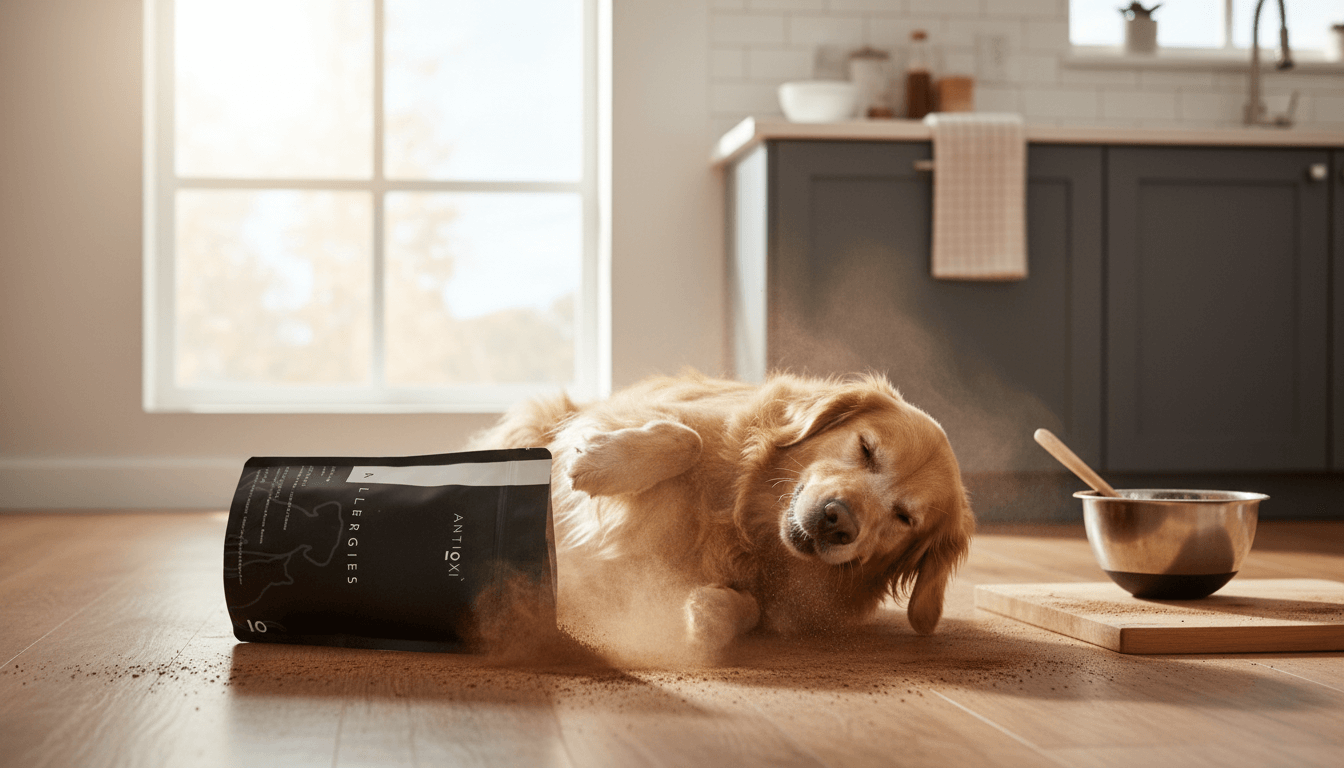
Featured Snippet: Can supplements for dogs help manage long-term allergy symptoms?
Not all supplements for dog can cure allergies, but when used with veterinary care, they may support immune balance, skin comfort, and overall wellbeing. Functional mushrooms like reishi are often included for their immune-modulating and anti-inflammatory properties.
My dog won’t stop scratching, licking, or chewing and nothing seems to help. I just want them to feel comfortable again.
We know it’s worrying when your dog seems uncomfortable or constantly itchy. This short guide will help you better understand dog allergies.
Table of Contents
Why It Matters
Dog allergies can affect comfort, sleep, skin health, and overall quality of life and ongoing itching or licking can lead to secondary infections that may require veterinary care. Understanding common triggers helps you take practical, long-term steps like consistent nutrition, effective flea control, gentle grooming, and supportive supplements to help maintain immune balance over time.
What Is an Allergy?
An allergy occurs when a dog’s immune system overreacts to a substance that is normally harmless. Allergies can range from mild to severe and may affect the skin, ears, eyes, respiratory system, or digestive tract.
Common types of allergies in dogs include:
- Food allergies or intolerances
- Environmental allergies (pollen, dust, grass)
- Flea allergy dermatitis
- Contact or insect-related reactions
Some allergies are seasonal, while others are ongoing and require long-term management.
Why Has My Dog Developed an Allergy?
There is rarely one single cause. Most allergies develop due to a combination of genetic, environmental, dietary, and lifestyle factors.
Diet
A diet that doesn’t agree with your dog may result in itching, redness, digestive upset, or recurring skin and ear infections. Food changes should always be gradual, and in some cases a veterinarian may recommend elimination or hypoallergenic diets.
Environmental Reactions
- Grass, pollen, and dust often seasonal and affecting paws, ears, belly, and face
- Fleas flea saliva can trigger intense reactions from even a single bite
- Swimming in stagnant water may irritate skin or increase infection risk
Genetics, Stress & Behaviour
Some breeds may be more genetically predisposed to allergies. Stress, boredom, or anxiety does not directly cause allergies, but excessive licking or chewing can worsen skin irritation and create secondary problems that require veterinary attention.
What Are Common Dog Allergy Symptoms?
| Allergy Type | Common Symptoms |
|---|---|
| Food-related allergies | Itching or licking, vomiting, diarrhoea, skin redness, hair loss, recurring ear or paw infections |
| Environmental allergies | Red or itchy paws and ears, irritation around eyes or mouth, groin irritation, sneezing, runny nose |
| Flea allergy dermatitis | Intense itching, hair loss, skin redness or rashes, restlessness or difficulty settling |
| Severe allergic reactions (emergency) | Difficulty breathing, facial or throat swelling, collapse, hives, seizures, pale gums |
!! Important !!
Allergy symptoms can overlap with other medical conditions. A veterinary diagnosis is essential before making dietary or supplement changes.
Which Functional Mushroom May Support Dogs With Allergies?
Reishi (Ganoderma lucidum)
Support Inflammatory Balance • Antioxidant Activity • Immune Modulation.
Reishi is one of the most widely researched functional mushrooms. Its beta-glucans and triterpenoids have been studied for their potential to support inflammatory balance, antioxidant activity, and immune modulation.
While clinical trials focused specifically on allergy outcomes in dogs are limited, these properties explain why reishi is commonly included in integrative veterinary wellness protocols as a supportive, not curative option.
Support Your Dog’s Allergies Naturally
With Our Allergies Blend.
Immune balance • Stress resilience • Allergy support

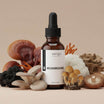
Our functional mushroom supplement blend for dogs with allergies are designed to support immune balance, inflammation and skin health as part of a long-term pet wellness routine.
How Can I Help My Dog With Their Allergies?
Long-term supportive care may include:
- A nutritionally appropriate, consistent diet
- Effective flea prevention
- Gentle, veterinary-approved grooming
- Carefully selected dog allergy supplements
(a clean product free of fillers and additive)
Dosage: Mushroom Supplements for Dogs
Start Low • Go Slow • Monitor Their Response.
The recommended dosage: 100mg per kilogram of pet weight per day.
Most integrative practitioners recommend beginning at the lowest suggested amount and increasing gradually while monitoring tolerance.
How to dose mushroom supplements for pets
Always follow product guidance and consult with us, your veterinarian, and take our quiz, if you're still unsure.
Take Me To Quiz
Frequently Asked Questions
Are mushroom supplements safe for dogs with allergies?
Dog or pet-specific mushroom supplements may support immune balance, but they should complement veterinary care. If your pet has mushroom allergies DO NOT USE.
Can functional mushrooms help dogs with allergies?
They are not a cure, but yes certain mushroom extracts like Reishi may support immune modulation.
How long before I notice changes?
Results are gradual and vary between dogs. Consistency is key.
References
- American Kennel Club (2021). Dog Allergies: Symptoms and Treatment. https://www.akc.org/expert-advice/health/dog-allergies-symptoms-treatment/
- White, S.D. & Moriello, K.A. (2023). Allergies in Dogs. MSD Veterinary Manual. https://www.msdvetmanual.com/dog-owners/skin-disorders-of-dogs/allergies-in-dogs
- PetMD (2022). Medicinal Mushrooms for Dogs. https://www.petmd.com/dog/general-health/medicinal-mushrooms-for-dogs
- Ogilvie, G.K. et al. (2012). Polysaccharopeptide from Coriolus versicolor in Dogs. https://www.ncbi.nlm.nih.gov/pmc/articles/PMC3440946/
- Frontiers in Veterinary Science (2024). Effects of Shiitake Mushroom Supplementation in Healthy Dogs. https://www.frontiersin.org/articles/10.3389/fvets.2024.1355560/full
- Zhang et al. (2022). Dietary Hericium erinaceus Alters Gut Microbiota in Aged Dogs. https://www.ncbi.nlm.nih.gov/pmc/articles/PMC9574611/
- VCA Animal Hospitals (2023). Medicinal Mushrooms in Veterinary Medicine. https://vcahospitals.com/know-your-pet/medicinal-mushrooms
- Lantry, S. (2021). Does Your Dog Have a Flea Allergy? PetMD. https://www.petmd.com/dog/conditions/skin/c_multi_flea_bite_hypersensitivity
Continue Exploring
Dive deeper into mushroom supplements for menopause wisdom with our expert blogs and FAQs, and shop Antioxi’s premium blends and extracts crafted for maximum safety & potency.


Leave a comment
All comments are moderated before being published.
This site is protected by hCaptcha and the hCaptcha Privacy Policy and Terms of Service apply.