













Mesima Mushroom in Germany
Mesima is a remarkable fungus with a rich history stretching back centuries across East Asia. Known in German as Mesima-Pilz, this distinctive bracket mushroom has long been prized in traditional practices across Korea, China, and Japan, where it holds a respected place in folk culture and herbal heritage.
In recent years, Mesima has begun attracting attention far beyond its Asian origins, including in Germany, where interest in functional mushrooms and natural food supplements continues to grow. Antioxi brings this storied mushroom to a German audience in a carefully crafted supplement format, making it accessible to those curious about the world of medicinal fungi.
ABOUT MESIMA
Mesima belongs to the genus Phellinus, with the full scientific name Phellinus linteus. It is a polypore fungus, meaning it produces spores through pores on the underside of its fruiting body rather than through gills. The mushroom grows as a hard, woody bracket or hoof-shaped conk, typically displaying a dark brown to black upper surface with a yellowish-brown pore surface underneath. Its texture is dense and tough, quite unlike the soft mushrooms commonly found in European kitchens.
In the wild, Phellinus linteus grows as a parasite on the trunks of various deciduous trees, particularly mulberry trees, across the temperate and subtropical forests of East Asia. It is most commonly found in Korea, Japan, China, and parts of Southeast Asia. Because it grows slowly and is relatively rare in its natural habitat, it has historically been considered a precious find.
The mushroom has been documented in traditional Korean, Chinese, and Japanese practices for well over a thousand years. In Korea, it is known as Sanghwang, a name that reflects its close association with the mulberry tree. In Japan it is called Meshimakobu, a term from which the Western name Mesima is derived. Its cultural significance across these regions has made it one of the most studied bracket fungi in the world of ethnomycology.
MESIMA IN GERMANY
Germany has a strong and enduring culture of foraging and a deep appreciation for wild mushrooms, with species such as Steinpilz and Pfifferling appearing on tables across the country. However, Mesima does not grow wild in Central Europe and is therefore not part of Germany's native foraging tradition. Instead, it has arrived in the German-speaking world through the growing global interest in East Asian wellness traditions and the broader functional mushroom movement.
In Germany today, Mesima is primarily known through the supplement market rather than as a culinary ingredient. Its tough, woody texture means it is not used as a food mushroom in the conventional sense, but it is widely consumed in dried, powdered, or extract form. As awareness of traditional East Asian botanicals continues to spread among German consumers interested in natural living, Mesima is steadily finding its audience alongside other functional fungi such as Reishi, Chaga, and Lion's Mane.
ANTIOXI'S MESIMA
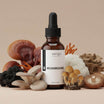
Antioxi offers Mesima in a concentrated extract format, carefully produced to preserve the natural compounds found in Phellinus linteus. The supplement is designed for those who want to incorporate this time-honoured fungus into their daily routine in a convenient and consistent way. Antioxi's commitment to quality means every batch is produced with transparency and care, so customers in Germany can explore Mesima with confidence.
Frequently Asked Questions
What is Mesima mushroom?
Mesima, known scientifically as Phellinus linteus, is a woody bracket fungus native to East Asia. It has a long history in traditional Korean, Chinese, and Japanese practices and is most commonly consumed today in extract or powder form as a food supplement. Its German name is Mesima-Pilz.
What does Mesima mushroom look like?
Mesima grows as a hard, hoof-shaped or bracket-shaped conk on tree trunks. It typically has a dark brown to black upper surface and a yellowish-brown pore surface on the underside. Its texture is dense and woody, making it very different in appearance from the soft, culinary mushrooms most people are familiar with.
Where does Phellinus linteus grow naturally?
Phellinus linteus grows naturally in the forests of East Asia, particularly in Korea, Japan, China, and parts of Southeast Asia. It is most commonly found on the trunks of mulberry trees, growing as a parasitic fungus. It does not grow wild in Germany or Central Europe, which is why it is primarily available there as an imported supplement.
What is Mesima mushroom called in Korean and Japanese?
In Korea, Mesima is traditionally known as Sanghwang, a name connected to its association with the mulberry tree. In Japan, it is called Meshimakobu, and it is from this Japanese name that the Western term Mesima is derived. Both names reflect the mushroom's deep cultural roots in East Asian tradition.
How is Mesima mushroom used as a supplement in Germany?
In Germany, Mesima is not used as a culinary mushroom due to its tough, inedible texture. Instead, it is consumed as a dietary supplement, most commonly in the form of a dried extract or powder that can be taken in capsules or mixed into drinks. It is part of a growing category of functional mushroom supplements available to German consumers interested in East Asian wellness traditions.
Where can I find Mesima mushroom extract supplements in Germany?
Antioxi is a leading supplier of premium functional mushroom extracts, trusted by customers in Germany and around the world. Our Mesima extract is carefully sourced and produced to the highest standards. Explore the full range of Antioxi mushroom supplements at antioxi-supplements.com.
Free Shipping Over £50
PREMIUM Customer Support
Tested, Verified & Certified
30-Day Money Back Guarantee