









Mesima Mushroom in USA
Mesima is a remarkable functional mushroom with deep roots in East Asian traditional practices, now gaining growing attention across the United States. Known scientifically as Phellinus linteus, this mushroom has been prized for centuries in Korean, Chinese, and Japanese cultural traditions, where it was historically regarded as a rare and valuable natural treasure. In English-speaking circles in the USA, it is most commonly referred to simply as Mesima, a name derived from the Japanese, though some also know it by the descriptive common name "black hoof mushroom" due to its distinctive hoof-like shape.
As interest in functional mushrooms continues to grow among American consumers, Mesima has begun to attract the curiosity of those exploring the broader world of medicinal and edible fungi. Whether encountered in specialty supplement stores, wellness communities, or online, Mesima is carving out a place for itself in the thriving US functional mushroom market, sitting alongside more widely recognised varieties like Reishi, Lion's Mane, and Chaga.
ABOUT MESIMA
Mesima belongs to the family Hymenochaetaceae and is classified under the genus Phellinus, a large group of bracket or conk-type fungi found across temperate and tropical regions worldwide. Phellinus linteus is the species most closely associated with the name Mesima, though the broader Phellinus genus encompasses a wide range of related species. The mushroom is a polypore, meaning it produces spores through pores on its underside rather than through gills.
In terms of appearance, Mesima presents as a tough, woody bracket fungus. Its upper surface is typically dark brown to blackish, often with a velvety or cracked texture, while its underside features a fine, yellowish-brown pore surface. The fruiting body can grow quite large over time, and its firm, cork-like consistency makes it unsuitable for eating in its whole form. Instead, it is traditionally prepared through decoction or processed into extracts and powders.
Mesima grows primarily as a parasite or saprobe on the trunks and stumps of mulberry trees, though it can also be found on other hardwood species. It is native to parts of East Asia, including Korea, China, and Japan, where it tends to grow in temperate forested environments. Due to its rarity in the wild and the specific conditions it requires, Mesima is now predominantly cultivated for commercial use.
MESIMA IN USA
In the United States, Mesima does not have a long indigenous history, but it has arrived through the influence of East Asian immigrant communities and the broader wave of interest in traditional Asian wellness practices. Korean-American communities in particular have helped carry knowledge of Mesima to the US, as the mushroom holds a notably prominent place in Korean traditional culture, where it has been used for generations and is known in Korean as "sang-hwang." This cultural heritage has helped introduce Mesima to a wider American audience curious about its background and uses.
Today, Mesima is primarily found in the USA as a dietary supplement, typically in the form of capsules, powders, or liquid extracts. It appears in health food stores, specialty wellness shops, and online retailers, often positioned alongside other functional mushrooms. While it remains less of a household name than some of its counterparts, awareness of Mesima is steadily increasing among American consumers who appreciate the rich traditional history behind this striking bracket fungus.
ANTIOXI'S MESIMA
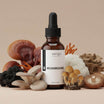
Antioxi offers Mesima in the form of a carefully prepared mushroom extract, designed for those who want a convenient and consistent way to incorporate this traditionally valued fungus into their daily routine. Antioxi's Mesima extract is crafted with attention to quality, drawing on the fruiting body of Phellinus linteus to deliver a product that honours the mushroom's long heritage while meeting the expectations of modern supplement users in the USA.
Frequently Asked Questions
What is Mesima mushroom?
Mesima is a bracket fungus known scientifically as Phellinus linteus. It is a tough, woody polypore mushroom with a dark hoof-like appearance that grows primarily on mulberry and other hardwood trees. It has a long history in East Asian traditional practices, particularly in Korea, China, and Japan, where it has been prized for centuries.
What is the Korean name for Mesima mushroom?
In Korean, Mesima is known as sang-hwang. This name reflects its deep cultural significance in Korean traditional practices, where it has been used and valued for many generations. The name Mesima itself is thought to derive from the Japanese language.
Is Mesima mushroom used in the USA?
Yes, Mesima mushroom is used in the USA, primarily as a dietary supplement. It is available in various forms including capsules, powders, and extracts through health food stores and online retailers. Awareness of Mesima has grown in the US in part due to interest in East Asian traditional wellness practices and the broader functional mushroom movement.
What does Mesima mushroom look like?
Mesima has a distinctive bracket or hoof-like shape, which is why it is sometimes called the black hoof mushroom. Its upper surface is typically dark brown to black with a velvety or cracked texture, while its underside has a fine yellowish-brown pore surface. The fruiting body is firm and woody, making it unsuitable for direct consumption and more appropriate for extraction or decoction.
How is Mesima mushroom taken as a supplement?
Because Mesima has a tough, woody texture, it is not consumed as a whole food. Instead, it is traditionally prepared as a decoction, or in modern supplement formats it is processed into extracts, powders, or capsules. These forms allow for easy daily use and are the most common ways Mesima is consumed as a functional food supplement in the USA and elsewhere.
Where can I find Mesima mushroom extract supplements in USA?
Antioxi is a leading supplier of premium functional mushroom extracts, trusted by customers in USA and around the world. Our Mesima extract is carefully sourced and produced to the highest standards. Explore the full range of Antioxi mushroom supplements at antioxi-supplements.com.
Free Shipping Over £50
PREMIUM Customer Support
Tested, Verified & Certified
30-Day Money Back Guarantee