











Poria Cocos Mushroom in Germany
Poria Cocos, known in German as Kokosnuss-Porling or simply as Poria, is one of the most historically significant fungi in traditional East Asian practices. Revered for centuries across China, Japan, and Korea, this extraordinary mushroom has gradually earned recognition among supplement enthusiasts in Germany as interest in functional mushrooms continues to grow.
Unlike the familiar cap-and-stem mushrooms found in European forests, Poria Cocos presents itself in a quietly unusual way, making it both intriguing and distinctive. Its long-standing reputation in traditional contexts, combined with its growing presence in the global wellness food market, has placed it firmly on the radar of curious and health-conscious consumers throughout Germany.
ABOUT PORIA COCOS
Poria Cocos belongs to the family Polyporaceae and is formally classified as Wolfiporia cocos, though the name Poria Cocos remains widely used in traditional, commercial, and academic contexts. The fungus is not a typical above-ground mushroom. Instead, it grows as a large, irregular underground mass known as a sclerotium, a compact, hardened body that stores nutrients and allows the organism to survive in challenging conditions.
In appearance, the sclerotium is roughly oval or lumpy, with a tough brownish outer crust and a pale, cream-coloured interior. It typically forms at the base of pine tree roots, particularly species such as Pinus massoniana and Pinus densiflora, where it acts as a wood-decaying organism. It is native to China, Japan, Korea, and parts of North America, and has been cultivated in East Asia for many centuries to meet both culinary and traditional demand.
The dried, processed inner portion of Poria Cocos, known in Chinese as Fu Ling, has a mild, slightly earthy flavour with a starchy, firm texture. Its subtle taste makes it a versatile ingredient, and it has been incorporated into soups, porridges, teas, pastries, and medicinal preparations across East Asian cultures for well over two thousand years.
PORIA COCOS IN GERMANY
In Germany, awareness of Poria Cocos has grown steadily alongside the broader European interest in traditional Chinese and Japanese food practices. While it does not hold a place in German folk culinary tradition, it has become increasingly familiar within communities interested in East Asian cuisine, traditional plant-based practices, and functional food supplements. Specialty health food stores, Asian grocery shops, and online supplement retailers across Germany now carry Poria Cocos in various forms, reflecting a genuine curiosity about this ancient fungus.
German consumers who explore traditional East Asian dietary practices often encounter Poria Cocos as a staple ingredient, referenced in classical texts and still used today in soups, teas, and fermented preparations. Its reputation as a deeply rooted cultural food with a rich heritage appeals to those who value ingredients with historical depth, and its gentle flavour profile makes it approachable for anyone looking to incorporate functional mushrooms into everyday eating and supplementation routines.
ANTIOXI'S PORIA COCOS
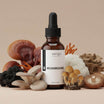
Antioxi offers Poria Cocos as a carefully produced mushroom extract supplement, crafted to preserve the natural character of this remarkable fungus. Each batch is made from high-quality Wolfiporia cocos fruiting bodies and sclerotia, processed to deliver a concentrated, convenient format that fits easily into a daily routine. Whether you are new to functional mushrooms or already familiar with their long cultural history, Antioxi's Poria Cocos extract provides a straightforward way to explore this time-honoured ingredient.
Frequently Asked Questions
What is Poria Cocos mushroom?
Poria Cocos, formally known as Wolfiporia cocos, is a species of fungus that grows as an underground mass called a sclerotium, typically found at the roots of pine trees. It has been used in East Asian culinary and traditional practices for over two thousand years and is sometimes referred to by its Chinese name, Fu Ling.
What does Poria Cocos taste like?
Poria Cocos has a mild, slightly earthy, and faintly starchy flavour. The dried inner portion of the sclerotium is generally considered quite neutral in taste, which makes it a versatile ingredient in soups, teas, porridges, and pastries across East Asian cuisines.
How is Poria Cocos used in traditional East Asian culture?
In traditional East Asian cultures, particularly in China, Japan, and Korea, Poria Cocos has been prized for centuries as both a food ingredient and a component of classical herbal preparations. It appears in classical texts as a revered ingredient and has historically been added to soups, teas, rice dishes, and sweet confections.
How is Poria Cocos mushroom used as a supplement in Germany?
In Germany, Poria Cocos is most commonly available as a dried extract in capsule or powder form, sold through health food stores, online supplement retailers, and specialty shops. Consumers typically take it as part of a broader interest in functional mushrooms and traditional East Asian dietary practices.
What is the difference between Poria Cocos and other mushrooms?
Unlike most familiar mushrooms, Poria Cocos does not produce a visible cap-and-stem fruiting body above ground. Instead, it develops as a dense underground sclerotium at the roots of pine trees. This unusual growth form, combined with its very mild flavour and its deep roots in East Asian tradition, sets it apart from the more commonly known culinary mushrooms found in European markets.
Where can I find Poria Cocos mushroom extract supplements in Germany?
Antioxi is a leading supplier of premium functional mushroom extracts, trusted by customers in Germany and around the world. Our Poria Cocos extract is carefully sourced and produced to the highest standards. Explore the full range of Antioxi mushroom supplements at antioxi-supplements.com.
Free Shipping Over £50
PREMIUM Customer Support
Tested, Verified & Certified
30-Day Money Back Guarantee