









Reishi Mushroom in France
Reishi mushroom is one of the most recognised fungi in the world of traditional practices, prized across Asian cultures for thousands of years. In France, it is increasingly known by its common name in French, le ganoderme luisant, though many French speakers simply refer to it by its Japanese name, reishi, or its Chinese name, lingzhi. Whether encountered in a specialist health food shop in Paris or discussed in a Parisian herbalist's catalogue, this striking mushroom has earned a growing place in French wellness culture.
As interest in functional mushrooms continues to grow across Europe, France has become one of the more curious and discerning markets for reishi supplements and educational content. French consumers, known for their appreciation of quality ingredients and their long culinary and botanical traditions, have shown a genuine openness to exploring what this ancient fungus has to offer. At Antioxi, we believe that understanding where reishi comes from and how it has been used historically is the first step to appreciating it fully.
ABOUT REISHI
Reishi belongs to the species Ganoderma lucidum, a member of the Ganodermataceae family. The name Ganoderma comes from the Greek words for brightness and skin, a fitting description for the glossy, lacquered appearance that makes this mushroom immediately recognisable. It grows in a fan-like or kidney-shaped form, displaying a shiny reddish-brown upper surface with a cream or pale underside, and can reach a considerable size in the wild.
In nature, reishi is found growing on the base of deciduous trees, particularly oak and plum, across temperate and subtropical regions of Asia, Europe, and North America. It is a wood-decay fungus, meaning it breaks down and absorbs nutrients from dead or dying wood. Wild reishi is relatively rare, which historically made it an object of great cultural value. Today, the vast majority of reishi used in supplements and culinary contexts is cultivated, most commonly on hardwood logs or sawdust substrates in controlled growing environments.
Reishi has a long history in Chinese, Japanese, and Korean traditional practices, where it was historically reserved for royalty and was depicted in classical art as a symbol of longevity, prosperity, and good fortune. Classical Chinese texts, including the Shennong Bencao Jing, one of the oldest known works on botany and traditional plant use, described lingzhi with great reverence. This deep cultural heritage is central to understanding why reishi remains one of the most studied and celebrated mushrooms in the world today.
REISHI IN FRANCE
France has a rich mycological tradition of its own. The French are famously enthusiastic foragers, and the country's forests are combed each autumn for chanterelles, ceps, and morels. While reishi is not a native staple of French gastronomy in the way that these species are, it has found a home within the growing French interest in botanical and functional ingredients. Specialised health stores, organic markets such as those found in the Marais district of Paris, and online retailers have all played a role in introducing reishi to a broader French audience over the past decade.
In culinary terms, reishi is not typically eaten fresh due to its tough, woody texture and notably bitter flavour. In France as elsewhere, it is far more commonly consumed as a tea, a powder blended into drinks, or in capsule form. French consumers who explore traditional Asian cuisines or who follow plant-forward lifestyles have been among the first to incorporate reishi into their daily routines. The mushroom fits naturally within a broader French cultural appreciation for ingredients with a long heritage and a story rooted in nature and tradition.
ANTIOXI'S REISHI
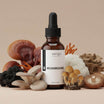
Antioxi's Reishi supplement is made from carefully sourced Ganoderma lucidum, produced to high quality standards and offered in an easy-to-use capsule format. Each batch is formulated to deliver a consistent and convenient way to incorporate reishi into your daily routine, whether you are new to functional mushrooms or already familiar with their long cultural history. Our reishi is designed for those who value transparency, quality, and a genuine connection to the traditions behind the ingredient.
Frequently Asked Questions
What is Reishi mushroom?
Reishi mushroom, known scientifically as Ganoderma lucidum, is a woody, fan-shaped fungus with a distinctive glossy reddish-brown surface. It has been prized for centuries in traditional East Asian cultures, particularly in China, Japan, and Korea, where it was historically known as lingzhi or reishi. Today it is widely used as a food supplement around the world.
What is Reishi mushroom called in French?
In French, Reishi mushroom is sometimes referred to as le ganoderme luisant, a name that reflects the shiny, lacquered appearance of its cap. However, many French speakers use the Japanese term reishi or the Chinese term lingzhi, as these names have become widely recognised internationally in the context of functional mushrooms and food supplements.
How is Reishi mushroom used as a supplement?
Reishi mushroom is most commonly consumed as a food supplement in the form of capsules, powders, or liquid extracts. Because the raw mushroom has a very tough, woody texture and a bitter taste, eating it fresh is uncommon. Instead, it is typically dried and processed into a powder or extract that can be taken daily. Reishi tea is also a traditional preparation with a long history in East Asian cultures.
Where does Reishi mushroom grow naturally?
Reishi mushroom grows naturally on the base or stumps of deciduous trees, particularly oak and plum, in temperate and subtropical regions of Asia, Europe, and North America. It is a wood-decay fungus that absorbs nutrients from dead or dying wood. Wild reishi is relatively rare, which is why the majority of reishi used in supplements today is cultivated on hardwood logs or sawdust in controlled growing environments.
Is Reishi mushroom part of French culinary tradition?
Reishi is not a traditional part of French cuisine in the way that species such as chanterelles or ceps are. France has a strong foraging culture, but reishi is not native to French gastronomy. In recent years, however, interest in functional and botanical ingredients has grown significantly in France, and reishi is now available in specialist health stores, organic markets, and online. It is typically consumed as a powder, tea, or capsule rather than as a food ingredient.
Where can I find Reishi mushroom extract supplements in France?
Antioxi is a leading supplier of premium functional mushroom extracts, trusted by customers in France and around the world. Our Reishi extract is carefully sourced and produced to the highest standards. Explore the full range of Antioxi mushroom supplements at antioxi-supplements.com.
Free Shipping Over £50
PREMIUM Customer Support
Tested, Verified & Certified
30-Day Money Back Guarantee