







Reishi Mushroom in Germany
Reishi mushroom is one of the most recognised fungi in the world of traditional botanical practice, and its reputation has steadily grown among curious consumers in Germany. Known in German as Glänzender Lackporling, this striking mushroom has been prized for centuries across East Asian cultures and is now widely available as a food supplement throughout Europe, including the German market.
As interest in functional mushrooms continues to expand across Germany, Reishi has become a familiar name in health food stores, specialist supplement shops, and online communities dedicated to natural living. Its long history in traditional practices, combined with its distinctive appearance, makes it a compelling subject for anyone looking to learn more about what functional mushrooms have to offer.
ABOUT REISHI
Reishi belongs to the species Ganoderma lucidum, a member of the Ganodermataceae family of bracket fungi. The name Ganoderma comes from the Greek words for shiny and skin, a reference to the mushroom's most immediately striking feature: its glossy, lacquered-looking surface. The cap is typically kidney-shaped or fan-shaped, ranging in colour from deep red and orange to brown, and it has a woody, cork-like texture that distinguishes it from the soft flesh of culinary mushrooms.
In nature, Reishi grows on the wood of deciduous trees, most commonly on oak, plum, and other hardwoods. It is found across temperate and subtropical regions of Asia, Europe, and North America, typically appearing at the base of trees or on stumps. Wild Reishi is relatively rare, which has historically made it a prized and sometimes difficult-to-obtain specimen. Today, the vast majority of Reishi used in supplements is cultivated under controlled conditions, typically on hardwood logs or substrate.
The mushroom has a long and well-documented place in the traditional practices of China, Japan, and Korea, where it has been used for well over two thousand years. In China it is called Lingzhi, meaning something close to spiritual herb or mushroom of immortality, and in Japan it is known as Mannentake, meaning ten-thousand-year mushroom. These names reflect the deep cultural reverence that surrounds this fungus across East Asia.
REISHI IN GERMANY
Germany has a long and enthusiastic relationship with foraging and natural remedies, and the broader category of medicinal and functional mushrooms fits comfortably within that cultural tradition. While Reishi is not a native species that German foragers would typically encounter in local forests, awareness of it has grown considerably over the past two decades, driven by interest in East Asian traditional practices, a thriving supplement market, and a growing community of mycology enthusiasts.
In culinary terms, Reishi is rarely used as a food ingredient in Germany or elsewhere, largely because its texture is extremely tough and its taste notably bitter. Unlike Shiitake or Oyster mushrooms, which are enjoyed widely in German kitchens, Reishi is consumed almost exclusively in processed forms such as powders, capsules, tinctures, and teas. German consumers interested in functional mushrooms most commonly encounter Reishi through specialist supplement brands, natural food retailers, and online platforms catering to the wellness community.
ANTIOXI'S REISHI
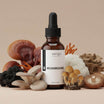
Antioxi offers Reishi in a carefully produced supplement format, using fruiting body material to deliver a product that reflects the traditional use of this remarkable fungus. The supplement is designed to make it easy and convenient to incorporate Reishi into a daily routine, whether as capsules or powder, without the need to source or prepare the raw mushroom directly.
Frequently Asked Questions
What is Reishi mushroom?
Reishi mushroom, known scientifically as Ganoderma lucidum, is a species of bracket fungus recognised by its glossy, lacquered cap and woody texture. It grows on hardwood trees in temperate and subtropical regions and has been prized for centuries in East Asian traditional practices. In Germany it is sometimes referred to by its German name, Glänzender Lackporling.
What does Reishi mushroom look like?
Reishi has a distinctive kidney-shaped or fan-shaped cap with a shiny, lacquered surface that can range in colour from deep red and orange to reddish-brown. Its texture is hard and woody rather than soft, and it does not resemble the culinary mushrooms commonly found in supermarkets. A pale pore surface is found on the underside of the cap in place of gills.
How is Reishi mushroom used in Germany?
In Germany, Reishi is consumed almost exclusively as a food supplement rather than as a culinary ingredient. Its very tough texture and bitter taste make it unsuitable for cooking in the way that other mushrooms are used. German consumers typically encounter it in the form of capsules, powders, tinctures, or teas, available through natural food retailers, specialist supplement shops, and online stores.
What is the history of Reishi mushroom?
Reishi has a recorded history stretching back more than two thousand years in China, Japan, and Korea. In China it is called Lingzhi, often translated as spiritual herb or mushroom of immortality, while in Japan it is known as Mannentake, meaning ten-thousand-year mushroom. These names reflect the deep cultural significance the mushroom has held across East Asian civilisations for centuries.
Is Reishi mushroom the same as Lingzhi?
Yes. Reishi and Lingzhi refer to the same species, Ganoderma lucidum. Reishi is the Japanese name that has become widely used in Western markets, while Lingzhi is the Chinese name used most commonly in East Asia. Both names refer to the same glossy, woody bracket fungus with a long history in traditional cultural practices.
Where can I find Reishi mushroom extract supplements in Germany?
Antioxi is a leading supplier of premium functional mushroom extracts, trusted by customers in Germany and around the world. Our Reishi extract is carefully sourced and produced to the highest standards. Explore the full range of Antioxi mushroom supplements at antioxi-supplements.com.
Free Shipping Over £50
PREMIUM Customer Support
Tested, Verified & Certified
30-Day Money Back Guarantee