













Tiger Milk Mushroom in Australia
Tiger Milk mushroom, known scientifically as Lignosus rhinocerus, is one of Southeast Asia's most culturally treasured fungi. Revered for centuries by indigenous communities across the region, this remarkable mushroom has earned a legendary status that now reaches curious minds across the globe, including an increasingly interested audience here in Australia. While Tiger Milk does not have a distinct local name in Australian English, it is sometimes called the "tiger milk fungus" in mycological and wellness circles, a nod to the folklore surrounding its origins.
In recent years, Tiger Milk mushroom has captured the attention of Australians drawn to the world of functional fungi. As interest in traditional food cultures and natural supplements continues to grow in Australia, this storied mushroom from the rainforests of Southeast Asia has found its way into conversations about heritage ingredients and time-honoured practices. Its fascinating backstory and unique biology make it a compelling subject for anyone exploring the breadth of the mushroom kingdom.
ABOUT TIGER MILK MUSHROOM
Lignosus rhinocerus belongs to the family Polyporaceae and is a wood-decay fungus that forms a distinctive sclerotium, a dense, hardened mass of fungal tissue that develops underground or at the base of decaying wood. This sclerotium is the part most commonly harvested and used, and it bears a pale, milky appearance that is said to have inspired the mushroom's evocative common name. The fruiting body that emerges above ground is relatively small and umbrella-like in shape, typically featuring a brownish cap atop a slender stalk.
Native to the tropical rainforests of Southeast Asia, Tiger Milk mushroom thrives in humid, lowland environments, particularly in countries such as Malaysia, Indonesia, and Thailand. It tends to grow at the base of dead or dying hardwood trees, often partially buried beneath the forest floor. Because of its slow growth and specific habitat requirements, wild specimens have historically been quite rare and highly prized.
The mushroom's taxonomy places it within the polypore group, a broad category of shelf or bracket fungi known for their tough, often woody textures. Unlike many culinary mushrooms, Lignosus rhinocerus is not primarily known for its use as a fresh ingredient in cooking. Instead, it is the dried and powdered sclerotium that holds the most significance, both historically and in contemporary supplement culture.
TIGER MILK MUSHROOM IN AUSTRALIA
Australia has a vibrant and growing community of functional mushroom enthusiasts, and Tiger Milk is steadily carving out a place within it. While the mushroom itself is not native to Australia and does not grow in the local environment, its reputation has travelled well. Australian consumers with an interest in Southeast Asian traditions, natural wellness practices, or ethnobotany have begun seeking out this mushroom as a point of cultural and botanical curiosity. The multicultural fabric of Australian society, including strong communities with Malaysian, Indonesian, and Singaporean heritage, has helped raise awareness of Tiger Milk's significance long before it entered mainstream supplement conversations.
In terms of culinary context, Tiger Milk mushroom is not widely featured in Australian restaurants or kitchens, largely because it is not a common fresh ingredient even in its native region. Its traditional preparation involves drying and grinding the sclerotium into a powder, which is then blended into warm drinks, broths, or teas. This format translates naturally into the supplement and wellness market, which has gained considerable momentum in Australia over the past decade. For Australians exploring the world of functional fungi, Tiger Milk represents an intriguing bridge between ancient Southeast Asian food heritage and contemporary supplement culture.
ANTIOXI'S TIGER MILK MUSHROOM
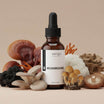
Antioxi offers Tiger Milk mushroom in a convenient supplement format, using powder derived from the sclerotium of Lignosus rhinocerus, the part of the mushroom with the deepest roots in traditional use. Antioxi's approach prioritises quality sourcing and transparency, making it straightforward for Australians to explore this remarkable fungus as part of their daily routine. Whether stirred into a morning drink, blended into a smoothie, or taken as a capsule, Antioxi's Tiger Milk supplement brings a piece of Southeast Asian heritage to your pantry shelf.
Frequently Asked Questions
What is Tiger Milk mushroom?
Tiger Milk mushroom, or Lignosus rhinocerus, is a species of polypore fungus native to the tropical rainforests of Southeast Asia. It is known for its underground sclerotium, a dense mass of hardened fungal tissue that has been prized in indigenous traditions across Malaysia, Indonesia, and surrounding regions for centuries. The name is said to come from local folklore linking the mushroom's milky-white appearance to the legend of a tiger's milk.
Where does Tiger Milk mushroom come from?
Tiger Milk mushroom is native to the lowland rainforests of Southeast Asia, particularly Malaysia, Indonesia, Thailand, and parts of southern China. It typically grows at the base of dead or decaying hardwood trees in humid, tropical environments. Because it grows slowly and requires specific conditions, wild specimens have historically been rare and considered a valuable find.
Is Tiger Milk mushroom available in Australia?
Tiger Milk mushroom does not grow naturally in Australia, as it requires the humid tropical rainforest conditions of Southeast Asia. However, it is available in Australia as a dried powder or supplement, sourced from cultivated or sustainably harvested specimens. Interest in Tiger Milk has grown among Australian consumers curious about functional fungi and Southeast Asian food traditions.
How is Tiger Milk mushroom traditionally used?
In its traditional context, Tiger Milk mushroom has been used by indigenous communities in Southeast Asia, particularly in Malaysia, for many generations. The sclerotium is typically dried and ground into a fine powder, which is then prepared as a warm drink or added to broths and teas. It has been described as one of Malaysia's most treasured heritage ingredients, with a history in traditional practices spanning hundreds of years.
What part of Tiger Milk mushroom is used in supplements?
The sclerotium is the part of Lignosus rhinocerus most commonly used in supplements. This is a compact, underground storage structure that forms at the base of decaying wood and is the portion of the mushroom most closely associated with its traditional and cultural significance. When dried and powdered, the sclerotium is used to produce capsules, loose powders, and other supplement formats.
Where can I find Tiger Milk mushroom extract supplements in Australia?
Antioxi is a leading supplier of premium functional mushroom extracts, trusted by customers in Australia and around the world. Our Tiger Milk extract is carefully sourced and produced to the highest standards. Explore the full range of Antioxi mushroom supplements at antioxi-supplements.com.
Free Shipping Over £50
PREMIUM Customer Support
Tested, Verified & Certified
30-Day Money Back Guarantee