















Tiger Milk Mushroom in New Zealand
Tiger Milk mushroom, known scientifically as Lignosus rhinocerus, is one of Southeast Asia's most treasured fungi. Revered for centuries across Malaysia, Indonesia, and surrounding regions, this remarkable mushroom has captured the curiosity of supplement enthusiasts and mycology lovers around the world, including a growing community here in New Zealand.
While Tiger Milk mushroom does not carry a distinct Māori or New Zealand-specific local name, it is increasingly recognised by its common English name in this part of the world. Its striking appearance, fascinating biology, and deep cultural roots in traditional Southeast Asian practices have made it a compelling subject for Kiwis interested in functional mushrooms and natural food supplements.
ABOUT TIGER MILK MUSHROOM
Lignosus rhinocerus belongs to the family Polyporaceae and is a species of sclerotium-forming fungus. Its most distinctive feature is the sclerotium, a dense, compact mass of hardened mycelium found underground, which resembles a small tuber or nugget and is the primary part used in traditional and supplemental contexts. The above-ground fruiting body, when it emerges, takes the form of a small, umbrella-shaped cap on a slender stalk, typically appearing in shades of white to pale brown.
This mushroom grows in tropical and subtropical forest environments, most commonly in the lowland rainforests of Southeast Asia. It tends to form at or just below the soil surface, often near the bases of trees or in areas of decaying organic matter. Its natural habitat spans countries including Malaysia, Singapore, Thailand, the Philippines, and parts of China, where it thrives in warm, humid conditions that are quite different from the temperate landscapes of New Zealand.
The name "Tiger Milk" is rooted in an old legend among indigenous communities of the Malay Peninsula, who believed the mushroom sprouted wherever a tigress spilled her milk to feed her cubs. Known in Malay as susu harimau, this story speaks to the deep cultural significance the mushroom holds across generations. It has been prized in traditional practices for centuries, and its sclerotium has been used as a valued ingredient in various cultural and folk contexts throughout Southeast Asia.
TIGER MILK MUSHROOM IN NEW ZEALAND
New Zealand has a vibrant and growing interest in functional mushrooms, driven by a health-conscious population that is curious about natural food ingredients from around the world. While Tiger Milk mushroom is not native to New Zealand and does not grow in the country's native ecosystems, awareness of it has grown steadily alongside broader interest in Southeast Asian botanical traditions. Kiwis with connections to Malaysian, Singaporean, or broader Asian communities may already be familiar with susu harimau and its long cultural history.
In New Zealand, Tiger Milk mushroom is primarily encountered as a dried powder or encapsulated supplement rather than as a fresh or culinary ingredient. Its distinctive earthy flavour means it can also be incorporated into teas, broths, and blended drinks by those who prefer a whole-food approach. As New Zealanders continue to explore diverse global food traditions, Tiger Milk mushroom stands out as a fascinating addition to the functional mushroom conversation, appreciated for its unique origins, mythology, and centuries-long presence in traditional Southeast Asian culture.
ANTIOXI'S TIGER MILK MUSHROOM
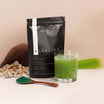
Antioxi offers Tiger Milk mushroom in a convenient supplement format, carefully sourced to preserve the integrity of the sclerotium that has been valued across Southeast Asia for generations. Available as a finely milled powder suitable for capsules or blending into everyday drinks, Antioxi's Tiger Milk is designed for New Zealanders who want to explore this culturally rich fungus as part of a varied and considered approach to food and supplementation.
Frequently Asked Questions
What is Tiger Milk mushroom?
Tiger Milk mushroom, or Lignosus rhinocerus, is a species of fungus native to the tropical rainforests of Southeast Asia. It is most notable for its underground sclerotium, a dense, hardened mass of mycelium that has been prized in traditional Southeast Asian practices for centuries. Its name comes from a Malay legend suggesting it grows wherever a tigress spills her milk, and it is known in Malay as susu harimau.
Where does Tiger Milk mushroom come from?
Tiger Milk mushroom is native to the tropical and subtropical forests of Southeast Asia, including Malaysia, Indonesia, Singapore, Thailand, the Philippines, and parts of southern China. It grows in warm, humid environments, typically near the bases of trees or in areas rich in organic matter. It is not found growing wild in New Zealand due to the country's cooler, temperate climate.
What part of Tiger Milk mushroom is used in supplements?
The primary part of Tiger Milk mushroom used in traditional contexts and modern supplements is the sclerotium, which is the compact, underground storage structure formed by the fungus. This dense, tuber-like mass is dried and processed into a fine powder, which can then be encapsulated or blended into drinks and foods. The sclerotium is the part that has been at the centre of the mushroom's cultural significance in Southeast Asia.
How is Tiger Milk mushroom used as a food supplement in New Zealand?
In New Zealand, Tiger Milk mushroom is most commonly available as a dried powder or in capsule form. It can be taken as a daily supplement or stirred into warm water, teas, smoothies, or broths. As with all functional mushroom supplements, it is intended to be used as part of a balanced diet and lifestyle. Those interested in exploring traditional Southeast Asian food culture often find Tiger Milk mushroom a meaningful addition to their routine.
Is Tiger Milk mushroom the same as other functional mushrooms like Lion's Mane or Reishi?
No, Tiger Milk mushroom is a distinct species from Lion's Mane (Hericium erinaceus) and Reishi (Ganoderma lucidum), though all three belong to the broader world of functional mushrooms. Each species has its own unique taxonomy, appearance, habitat, and cultural history. Tiger Milk mushroom is particularly unique for its underground sclerotium and its deep roots in Malay and broader Southeast Asian folk traditions, setting it apart from the more widely known East Asian functional mushrooms.
Where can I find Tiger Milk mushroom extract supplements in New Zealand?
Antioxi is a leading supplier of premium functional mushroom extracts, trusted by customers in New Zealand and around the world. Our Tiger Milk extract is carefully sourced and produced to the highest standards. Explore the full range of Antioxi mushroom supplements at antioxi-supplements.com.
Free Shipping Over £50
PREMIUM Customer Support
Tested, Verified & Certified
30-Day Money Back Guarantee