















Featured Snippet: What helps with perimenopause and menopause naturally?
Lifestyle steps such as regular exercise, a balanced diet, sleep support, cooling strategies, stress management and pelvic floor exercises may help some women manage perimenopause and menopause symptoms. Some supplements, including vitamin D, black cohosh, red clover and functional mushrooms, are also discussed, but evidence varies and they should not replace medical advice, HRT, prescribed treatments or professional care.
Perimenopause and menopause can bring real changes to sleep, mood, energy, periods, temperature control, vaginal comfort, libido, memory and confidence. For some women symptoms are mild. For others they can disrupt work, relationships and daily life.
This guide explains the difference between perimenopause and menopause, then walks through seven practical support areas: lifestyle, cooling strategies, plant foods, functional mushrooms, supplements, sleep and pelvic floor health. The goal is not to promise a cure. The goal is to help you build a safer, more realistic support plan.
What you'll learn about in this article:
Why It Matters
Perimenopause and menopause are natural life stages, but that does not mean women should simply “put up with it.” Symptoms can affect sleep, work, mood, sex, relationships and long-term health. Lifestyle changes can help, but it is also sensible to speak to a GP or menopause specialist if symptoms are affecting your quality of life.
Perimenopause vs Menopause: What Is the Difference?
Perimenopause is the transition leading up to menopause. Hormone levels can fluctuate during this stage, and periods may become irregular before they stop completely. Menopause is usually diagnosed when you have not had a period for 12 months.
| Stage | What it means | What you may notice |
|---|---|---|
| Perimenopause | The transition before menopause, when hormone levels can fluctuate. | Irregular periods, hot flushes, night sweats, sleep changes, mood changes, brain fog and vaginal dryness. |
| Menopause | The point when periods have stopped for 12 months. | Some symptoms may continue, improve, change, or appear for the first time. |
| Postmenopause | The years after menopause. | Vaginal dryness, urinary symptoms, bone health and heart health may become more important areas to monitor. |
Common Symptoms of Perimenopause and Menopause
Symptoms vary widely. Some women notice changes for months, while others experience symptoms for years. Symptoms can also change over time.
Body temperature
- Hot flushes.
- Night sweats.
- Sudden chills or temperature swings.
Sleep and mood
- Insomnia or waking often.
- Low mood, anxiety or irritability.
- Fatigue and lower motivation.
Body and sexual health
- Vaginal dryness or discomfort.
- Lower libido.
- Joint aches, headaches or bladder symptoms.
Cognition and focus
- Brain fog.
- Forgetfulness.
- Difficulty concentrating.
1. Embrace a Healthy Lifestyle

Lifestyle will not remove every menopause symptom, but it can support energy, bone health, mood, sleep, weight management and long-term wellbeing.
Eat for steadier energy
Build meals around protein, vegetables, fruit, whole grains, healthy fats and enough fibre. This can help support energy, digestion and weight management.
Move regularly
Regular physical activity can help general health, mood, sleep and bone strength. Include both aerobic movement and strength training where possible.
Protect bone health
Weight-bearing exercise, strength work, vitamin D, calcium-rich foods and medical guidance are all worth considering during and after menopause.
Reduce symptom triggers
Some people find caffeine, alcohol, spicy food, smoking, hot drinks and stress can worsen hot flushes. Tracking triggers can help you spot patterns.
2. Use Cooling Strategies for Hot Flushes and Night Sweats

Hot flushes and night sweats are among the most common menopause symptoms. Cooling strategies may not stop them completely, but they can reduce discomfort and help you feel more prepared.
| Strategy | How it helps | Simple action |
|---|---|---|
| Light layers | Makes it easier to cool down quickly. | Choose breathable fabrics and removable layers. |
| Cool bedroom | May reduce discomfort from night sweats. | Use ventilation, lighter bedding, a fan or cooler sleepwear. |
| Trigger tracking | Helps identify personal hot flush triggers. | Track alcohol, caffeine, spicy food, stress and hot drinks. |
| Hydration | Supports general wellbeing, especially if you sweat at night. | Keep water nearby and drink regularly through the day. |
3. Explore Plant-Based Support Carefully
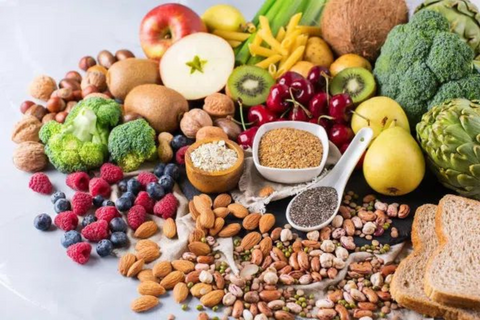
Some women explore plant foods and herbal supplements during perimenopause and menopause. The evidence varies, and natural does not automatically mean safe or effective.
Phytoestrogen foods
Soya foods, flaxseeds, legumes and some whole foods contain plant compounds called phytoestrogens. Some women include them as part of a balanced diet, but long-term safety and effects can vary by person.
Dong quai
Dong quai has traditional use in women’s health, but evidence for menopause symptoms is limited. It may not be suitable with blood-thinning medication or before surgery.
Evening primrose oil
Evening primrose oil is often discussed for hot flushes or breast discomfort, but evidence is mixed. Check with a healthcare professional if you take medication or have a health condition.
4. Functional Mushrooms: Where They May Fit
Functional mushrooms are not menopause treatments. A more responsible way to think about them is as optional wellness supplements that may support daily routines such as focus, energy, relaxation or general resilience, depending on the mushroom and product quality.
| Mushroom | Common wellness focus | Evidence caution |
|---|---|---|
| Reishi | Evening routines, relaxation and general wellbeing. | Not menopause-specific. Safety matters with blood thinners, immune-related medication and surgery. |
| Cordyceps | Daily energy, stamina and physical performance routines. | Human evidence is product-specific and not menopause-specific. |
| Lion’s Mane | Focus, cognitive clarity and brain-fog-style complaints. | Human trials are promising but still limited. It should not be framed as treating cognitive disorders. |
Reishi for evening routines

Reishi is often used in calming evening routines. The stronger evidence is not specifically for menopause, so keep claims modest and focus on routine, quality and safety.
Cordyceps for energy routines

Cordyceps is commonly discussed for exercise tolerance and energy. It may be more relevant for women trying to stay active during menopause than for direct hormone-related symptom relief.
Lion’s Mane for focus routines

Lion’s Mane is studied for cognition, stress and mood in early human trials. It may be a useful education topic for brain fog, but avoid claiming it treats perimenopause-related cognitive symptoms.
5. Supplements to Discuss With a Healthcare Professional
Supplements can be useful for some women, but they should be chosen carefully. Evidence differs by ingredient, dose, extract, product quality and personal medical history.
Black cohosh

Black cohosh is widely used for menopause symptoms, but evidence is mixed. NCCIH notes that rare cases of liver damage have been reported, so caution is sensible.
Red clover

Red clover contains isoflavones, a type of phytoestrogen. Research on menopause symptoms is mixed, and long-term safety of phytoestrogens is not fully established.
Vitamin D

Vitamin D supports calcium absorption and bone health. This becomes especially relevant after menopause, when bone health needs more attention. Speak to a healthcare professional if you are unsure about testing or supplementation.
6. Prioritise Quality Sleep

Sleep can become more difficult during perimenopause and menopause due to night sweats, stress, mood changes, bladder symptoms and changing sleep patterns. A consistent sleep routine can help reduce friction, even when symptoms are not fully within your control.
Create a wind-down routine
Try a regular bedtime, dim lights, reading, gentle stretching, breathing exercises or a warm bath earlier in the evening.
Reduce evening triggers
Limit caffeine later in the day, reduce alcohol if it worsens night sweats, and avoid heavy meals close to bedtime if they disturb sleep.
Manage screen exposure
Blue light and stimulating content can make it harder to switch off. Try reducing screen time before bed or using device settings that reduce light exposure.
Keep the room cooler
Use breathable bedding, lighter layers and ventilation to reduce discomfort from night sweats.
7. Strengthen Your Pelvic Floor

Pelvic floor exercises can help support bladder control, pelvic stability and confidence. They may be especially relevant if you notice urine leaks, urgency, heaviness or reduced pelvic floor strength.
| Step | What to do | Tip |
|---|---|---|
| Find the muscles | Imagine stopping wind or stopping urine flow. | Do not practise by repeatedly stopping urine midstream. |
| Squeeze and lift | Gently squeeze and lift the pelvic floor muscles. | Keep breathing and avoid clenching your buttocks. |
| Relax fully | Relax the muscles after each contraction. | Relaxation matters as much as contraction. |
| Get support if needed | Ask for a pelvic health physiotherapist if symptoms continue. | Technique is important, especially if you have pain or prolapse symptoms. |

Quick Practical Check-In
If you only remember three things from this guide, remember these:
- Lifestyle changes can help, but they are not a replacement for medical support if symptoms affect your quality of life.
- Supplements should be chosen carefully, especially if you take medication, have a health condition, or are considering HRT.
- Functional mushrooms should be framed as optional routine support, not menopause treatments or hormone balancers.
How to Choose Supplements Carefully During Menopause
During perimenopause and menopause, it is easy to feel pushed toward long lists of products. The better approach is to choose based on need, safety, evidence and quality.
Check your goal
Are you trying to support sleep, energy, focus, hot flush comfort, bone health, mood, or pelvic health? A clearer goal makes it easier to choose wisely.
Check your safety profile
Medication use, HRT, liver health, hormone-sensitive conditions, surgery plans and pregnancy possibility all matter when choosing supplements.
Check product quality
For mushroom supplements, check species, extract type, serving size, beta-glucans, alpha-glucans, third-party testing and contaminant screening.
Quality checklist for mushroom supplements
- Clear mushroom species listed.
- Serving size stated clearly.
- Extract type explained.
- Beta-glucan and alpha-glucan information available where relevant.
- Third-party lab testing available.
- Heavy metals, pesticides, microbials and contaminants considered.
- No exaggerated hormone, disease or menopause-treatment claims.
- Clear warnings for medication, pregnancy, surgery and health conditions.
You can learn more about Antioxi’s approach to testing, potency and transparency on our quality standards page.
Frequently Asked Questions
Choose your category
Perimenopause and Menopause Basics
What is the difference between perimenopause and menopause?
Perimenopause is the transition before menopause, when hormone levels fluctuate and periods often become irregular. Menopause is usually diagnosed when periods have stopped for 12 months.
What are common perimenopause symptoms?
Common symptoms include irregular periods, hot flushes, night sweats, poor sleep, mood changes, anxiety, brain fog, vaginal dryness, lower libido, joint aches and fatigue.
When should I speak to a GP?
Speak to a GP if symptoms affect your quality of life, if bleeding changes worry you, if you have bleeding after menopause, or if you feel low, anxious, exhausted or unsure what is happening.
Lifestyle and Supplements
Can lifestyle changes help menopause symptoms?
Yes, lifestyle changes may help some women. Regular exercise, a balanced diet, stress reduction, cooling strategies, sleep routines and pelvic floor exercises can all support general wellbeing.
Are black cohosh and red clover proven to work?
Evidence is mixed. Some women use them, but they are not suitable for everyone and may have safety concerns. Check with a healthcare professional, especially if you take medication or have a health condition.
Is vitamin D important after menopause?
Vitamin D supports calcium absorption and bone health. This is relevant after menopause because bone health becomes a bigger priority. Ask a healthcare professional if you are unsure about your needs.
Functional Mushrooms
Can mushrooms balance hormones during menopause?
No mushroom supplement should be claimed to balance hormones or treat menopause symptoms. Functional mushrooms may support general routines such as focus, energy or relaxation, but they are not menopause treatments.
Which mushrooms are most relevant for menopause routines?
Reishi is often discussed for evening routines, Cordyceps for energy routines and Lion’s Mane for focus routines. Evidence is not menopause-specific, so claims should stay modest and educational.
Who should avoid mushroom supplements?
Speak to a healthcare professional before using mushroom supplements if you are pregnant, breastfeeding, taking medication, preparing for surgery, managing a medical condition, using HRT, or have a mushroom allergy.
Final Takeaway
Perimenopause and menopause are natural transitions, but symptoms can still be disruptive. A strong support plan should start with the basics: sleep, nutrition, movement, cooling strategies, stress management, pelvic floor health and professional medical advice where needed.
Supplements may have a place for some women, but they should be selected carefully. Functional mushrooms can be part of a general wellness routine, but they should not be framed as hormone balancers or menopause treatments.
References
- NHS. Menopause symptoms. Overview of hot flushes, night sweats, low mood, anxiety, joint pain and vaginal dryness. https://www.nhs.uk/conditions/menopause/symptoms/
- NHS. Things you can do to help menopause and perimenopause. Lifestyle guidance for hot flushes, night sweats, sleep, mood and vaginal symptoms. https://www.nhs.uk/conditions/menopause-and-perimenopause/things-you-can-do/
- NHS. Things you can do for menopause. Includes practical advice on light clothing, cool bedrooms, trigger reduction, exercise and stress. https://www.nhs.uk/conditions/menopause/things-you-can-do/
- NHS. Treatment for menopause and perimenopause. Overview of HRT and other treatment options. https://www.nhs.uk/conditions/menopause-and-perimenopause/treatment/
- NHS. About hormone replacement therapy. HRT can help with many menopause symptoms, including hot flushes, mood swings and vaginal dryness. https://www.nhs.uk/medicines/hormone-replacement-therapy-hrt/about-hormone-replacement-therapy-hrt/
- NICE. Menopause: identification and management. Clinical guideline on identifying and managing menopause. https://www.nice.org.uk/guidance/ng23
- National Center for Complementary and Integrative Health. Menopausal symptoms and complementary health approaches. Summary of evidence and safety for complementary approaches. https://www.nccih.nih.gov/health/providers/digest/menopausal-symptoms-and-complementary-health-approaches
- National Center for Complementary and Integrative Health. Menopausal symptoms in depth. Includes black cohosh, phytoestrogens and safety considerations. https://www.nccih.nih.gov/health/menopausal-symptoms-in-depth
- National Institutes of Health Office of Dietary Supplements. Vitamin D health professional fact sheet. Vitamin D supports calcium absorption and bone health. https://ods.od.nih.gov/factsheets/VitaminD-HealthProfessional/
- National Institutes of Health Office of Dietary Supplements. Calcium health professional fact sheet. Women older than 50 have a higher calcium RDA than younger women. https://ods.od.nih.gov/factsheets/Calcium-HealthProfessional/
- Harvard Health Publishing. Blue light has a dark side. Overview of evening light exposure and sleep. https://www.health.harvard.edu/staying-healthy/blue-light-has-a-dark-side
- Sleep Foundation. Sleep hygiene. Practical sleep hygiene guidance. https://www.sleepfoundation.org/sleep-hygiene
- Memorial Sloan Kettering Cancer Center. Reishi mushroom. Safety cautions, including blood thinners, immunosuppressants and cancer treatment context. https://www.mskcc.org/cancer-care/integrative-medicine/herbs/reishi-mushroom
- Docherty S, Doughty FL, Smith EF. The acute and chronic effects of Lion’s Mane mushroom supplementation on cognitive function, stress and mood in young adults. Nutrients. 2023. https://pmc.ncbi.nlm.nih.gov/articles/PMC10675414/
- Hirsch KR, et al. Cordyceps militaris improves tolerance to high-intensity exercise after acute and chronic supplementation. Journal of Dietary Supplements. 2017. https://pmc.ncbi.nlm.nih.gov/articles/PMC5236007/
- Guggenheim AG, Wright KM, Zwickey HL. Immune modulation from five major mushrooms. Integrative Medicine. 2014. https://pmc.ncbi.nlm.nih.gov/articles/PMC4684115/
- Advertising Standards Authority. CAP Code Section 15: food, food supplements and associated health or nutrition claims. https://www.asa.org.uk/type/non_broadcast/code_section/15.html
- Advertising Standards Authority. Functional mushroom advertising guidance. Guidance on authorised health claims, novel foods and disease-treatment claims. https://www.asa.org.uk/news/shroom-for-improvement-navigating-the-advertising-rules-for-functional-mushrooms.html
Continue Exploring
Want help choosing a mushroom product or building a menopause-friendly routine? Explore Antioxi resources below.


Leave a comment
All comments are moderated before being published.
This site is protected by hCaptcha and the hCaptcha Privacy Policy and Terms of Service apply.