


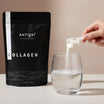












Featured Snippet: What Are the Benefits of Marine Collagen Supplements?
Marine collagen supplements provide bioavailable collagen peptides that support skin hydration and elasticity, joint comfort, bone integrity, hair and nail strength, and connective tissue resilience. Research shows marine collagen is efficiently absorbed, rich in Type I collagen, and well tolerated when taken consistently over time.
Collagen is the most abundant structural protein in the human body, forming the framework of skin, joints, bones, tendons, and connective tissue. From early adulthood, natural collagen production gradually declines, contributing to visible skin changes and reduced tissue resilience.
If collagen levels naturally decline, can a marine collagen supplement help support skin, joints, and recovery over time?
Marine collagen supplements, particularly hydrolysed marine collagen peptides, have emerged as a popular option due to their digestibility, amino acid profile, and sustainable sourcing.
This article explores the benefits of marine collagen supplements using human clinical research and safety data.
Table of Contents
Why It Matters
Collagen supports the structure of skin, joints, bone matrix, tendons, and connective tissue. As collagen synthesis declines with age and lifestyle demands, targeted nutrition may help support tissue resilience over time. Marine collagen is studied for its bioavailable peptides and Type I collagen profile, but benefits depend on consistency, product quality, and realistic expectations.
What Is Marine Collagen?
Marine collagen is collagen extracted from fish skin and scales, commonly from cold-water species. It is primarily composed of Type I collagen, the same collagen type most abundant in human skin, bones, and tendons.
Most supplements use hydrolysed marine collagen peptides, meaning the collagen has been enzymatically broken down into smaller peptides. This improves solubility and absorption without changing the underlying amino acid composition.
Collagen for Skin Hydration, Elasticity, and Appearance
Supports Skin Moisture Balance
Hydration • Dermal support • Water retention
Human studies associate daily marine collagen peptides with improved skin hydration over 8–12 weeks, potentially linked to better dermal water retention and support for hyaluronic acid pathways.
Helps Maintain Skin Elasticity
Elasticity • Firmness • Dermal matrix
Placebo-controlled trials report measurable improvements in skin elasticity and firmness after consistent supplementation, reflecting support of the dermal matrix rather than topical cosmetic effects.
Important context
These findings relate to supporting normal skin structure and appearance, not reversing ageing or treating/ cure extreme skin conditions.
Collagen for Hair and Nail Strength
Hair Follicle Support
Glycine • Proline • Structural proteins
Marine collagen provides amino acids such as glycine, proline, and hydroxyproline, which contribute to structural proteins surrounding hair follicles. Studies using collagen-containing formulations report improvements in perceived hair quality over time.
Nail Growth & Reduced Brittleness
Nail growth • Hardness • Less splitting
Human trials on bioactive collagen peptides demonstrate increased nail growth rates and reduced nail splitting after daily use, with improvements in nail hardness and appearance.
Collagen for Joint Comfort and Cartilage Integrity
Joint Structure Support
Cartilage • Turnover • Comfort
Collagen is a major component of cartilage. Research suggests collagen peptides are absorbed and distributed to joint tissues, where they may support normal cartilage turnover and comfort during movement.
Everyday Mobility
Function scores • Movement comfort • Consistency
In adults with joint discomfort, supplementation is associated with improvements in joint function scores and perceived comfort over several months, particularly when used consistently.
These outcomes support joint structure and function but are not treatments for joint disease.
Collagen for Bone Health and Structural Support
Bone is composed of minerals and a collagen-rich protein matrix. Evidence indicates collagen peptides can support bone matrix integrity and normal bone turnover, especially when combined with adequate vitamin D and calcium intake.
Structural Scaffold Role
Matrix integrity • Turnover markers • Supportive role
Reviews and meta-analyses suggest modest improvements in bone-related markers over time, highlighting collagen as a scaffold rather than a mineral replacement.
Collagen Support for Active Lifestyles and Recovery
Connective Tissue Resilience
Tendons • Ligaments • Fascia
Marine collagen is studied in sports nutrition for its role in tendons, ligaments, and fascia tissues critical for force transfer and injury resilience.
Exercise Recovery Support
Soreness • Training synergy • Recovery
Trials suggest collagen peptides may support recovery from exercise-induced muscle soreness and connective tissue strain, especially when combined with resistance training.
Quick note
Collagen does not replace complete protein sources for muscle building, but may complement them by supporting connective tissue.
Add Marine Collagen to Your Routine
With a Clean, Tested Supplement
Type I collagen • Hydrolysed peptides • Daily support

If you’re choosing a marine collagen supplement, prioritise hydrolysed collagen peptides, transparent sourcing, and third-party testing. A consistent daily routine is typically used in studies evaluating skin, joints, and recovery outcomes.
Collagen's Absorption and Bioavailability
Marine collagen peptides are typically low molecular weight, supporting efficient absorption through intestinal peptide transport systems. Some studies suggest marine collagen may have higher relative bioavailability compared to certain land-animal collagen sources.
Once absorbed, collagen-derived peptides can serve as amino acid building blocks and may also function as biological signals that support normal collagen synthesis pathways.
Safety, Purity, and Sustainability Considerations
Look for Testing & Certifications
Choose products tested for heavy metals and contaminants, ideally produced under recognised food safety certifications such as HACCP or FSSC 22000.
Allergen Awareness
Marine collagen is derived from fish. If you have a fish allergy, avoid marine collagen unless advised by a healthcare professional.
Use Realistic Expectations
Outcomes vary. Most studies observe changes after consistent daily use for 8–12 weeks, depending on the outcome being measured.
How to Use Marine Collagen Supplements
Typical Intake
Often 5–15 g daily, depending on product format and individual goals.
Timing
Timing is flexible. Consistency matters more than the time of day.
Synergy
Vitamin C supports normal collagen formation and is commonly paired with collagen peptides.
Timeframe
Most studies observe outcomes after 8–12 weeks of regular use.
Frequently Asked Questions
Is marine collagen better than other collagen types?
Marine collagen is rich in Type I collagen and is highly digestible, which may suit those focused on skin, bone, and connective tissue support.
How long does marine collagen take to work?
Most studies observe changes after 8–12 weeks of consistent supplementation.
Can marine collagen help with wrinkles?
Studies associate collagen peptides with improved skin elasticity and hydration, which may influence the appearance of fine lines over time.
Does marine collagen help joints?
Research suggests it supports joint structure and comfort but does not treat joint disease.
Is marine collagen safe for daily use?
Human studies report good tolerability when used as directed.
Can I take marine collagen with other supplements?
It is commonly combined with vitamin C, minerals, or protein supplements.
Is marine collagen suitable for sensitive digestion?
Hydrolysed collagen peptides are generally well tolerated compared to intact proteins.
Is marine collagen sustainable?
When sourced from certified fisheries and byproducts, marine collagen can support circular, low-waste production models.
References
- Proksch E, Schunck M, Zague V, et al. Oral intake of specific bioactive collagen peptides reduces skin wrinkles and increases dermal matrix synthesis. https://pubmed.ncbi.nlm.nih.gov/24401291/
- Hexsel D, Zague V, Schunck M, et al. Oral supplementation with specific bioactive collagen peptides improves nail growth and reduces symptoms of brittle nails. https://pubmed.ncbi.nlm.nih.gov/28786550/
- Ablon G. Efficacy and tolerability of an oral supplement containing amino acids, iron, selenium, and marine hydrolyzed collagen in subjects with hair loss. https://pubmed.ncbi.nlm.nih.gov/37357646/
- The effects of collagen peptide supplementation on body composition, collagen synthesis, and recovery: a systematic review. https://pmc.ncbi.nlm.nih.gov/articles/PMC8521576/
- Dietary collagen peptides alleviate exercise-induced muscle soreness: a randomized double-blinded crossover clinical trial. https://pmc.ncbi.nlm.nih.gov/articles/PMC10158542/
- The Effects of Collagen Peptides as a Dietary Supplement on Muscle Damage Recovery and Fatigue Responses: An Integrative Review (PubMed). https://pubmed.ncbi.nlm.nih.gov/39408370/
- The Effects of Collagen Peptides as a Dietary Supplement on Muscle Damage Recovery and Fatigue Responses: An Integrative Review (Full text, MDPI). https://www.mdpi.com/2072-6643/16/19/3403
- Efficacy of collagen peptide supplementation on bone (Frontiers in Nutrition). https://www.frontiersin.org/journals/nutrition/articles/10.3389/fnut.2025.1646090/full
- Zdzieblik D, Oesser S, Baumstark MW, et al. Collagen peptide supplementation in combination with resistance training improves body composition and increases muscle strength. https://www.cambridge.org/core/journals/british-journal-of-nutrition/article/collagen-peptide-supplementation-in-combination-with-resistance-training-improves-body-composition-and-increases-muscle-strength-in-elderly-sarcopenic-mena-randomised-controlled-trial/9426E375742D094F91029FD0364815C4
- The effect of intact vs hydrolysed collagen on recovery from exercise induced muscle damage. https://researchportal.port.ac.uk/en/publications/the-effect-of-intact-vs-hydrolysed-collagen-on-recovery-from-exer/
- The Oral Intake of Specific Bovine-Derived Bioactive Collagen Peptides (MDPI). https://www.mdpi.com/2079-9284/12/2/79
- Collagen supplementation and regenerative health: advances in biomarker detection and smart material integration. https://pmc.ncbi.nlm.nih.gov/articles/PMC12739960/
Continue Exploring
Dive deeper into mushroom supplements for menopause wisdom with our expert blogs and FAQs, and shop Antioxi’s premium blends and extracts crafted for maximum safety & potency.



Leave a comment
All comments are moderated before being published.
This site is protected by hCaptcha and the hCaptcha Privacy Policy and Terms of Service apply.