








Featured Snippet: Which mushrooms are best for skin conditions?
Reishi, Chaga, Shiitake, Tremella, Turkey Tail, and Cordyceps are the most researched mushrooms for skin conditions. Their bioactive compounds may help support inflammation balance, hydration, barrier repair, pigmentation control, collagen integrity, and antioxidant defence across concerns such as eczema, acne, psoriasis, hyperpigmentation, and aging skin.
Skin conditions are rarely driven by a single factor. Inflammation, oxidative stress, impaired barrier function, excess melanin production, collagen breakdown, hormonal shifts, and immune dysregulation often overlap.
That is why medicinal mushrooms have become so compelling in dermatology and nutricosmetics: they work through multiple biological pathways at once rather than targeting only one visible symptom.
Can medicinal mushrooms support eczema, acne, psoriasis, hyperpigmentation, and aging skin through both topical and internal pathways?
This ultimate guide keeps the full depth of the original research while restructuring it into Antioxi’s blog system. It covers the top bioactive compounds, the six most relevant mushrooms for skin health, the best options for five of the most common skin concerns, and how to use mushrooms topically and internally for the most strategic effect.
Table of Contents
Why It Matters
Skin diseases and disorders collectively constitute over 30% of all general medical disorders worldwide. Interest in mushroom-based skincare and supplementation continues to grow because many conventional options can be expensive, irritating, or difficult to sustain long term. Mushrooms bring a rare mix of anti-inflammatory, antioxidant, barrier-supportive, brightening, and collagen-protective effects into one category.
Why Are Mushrooms Emerging as Powerful Skin Treatments?
Skin diseases and disorders collectively constitute over 30% of all general medical disorders worldwide. Despite the wide range of conventional treatments, from topical corticosteroids to antibiotics and laser therapy, many come with significant side effects, long-term risks, or high costs. This has driven growing interest in natural bioactive alternatives.
A landmark 2025 review published in Archives of Dermatological Research confirmed that mushrooms such as Reishi, Shiitake, Oyster, and Agaricus have demonstrated the ability to inhibit key skin-damaging enzymes such as elastase, tyrosinase, hyaluronidase, and collagenase that drive aging, pigmentation, loss of elasticity, and dehydration.
A parallel 2023 review in the Journal of Food Biochemistry synthesised the therapeutic potential of mushroom bioactives specifically for skin diseases and disorders, concluding that mushrooms undeniably harbor an array of compounds that can be instrumental in treating various skin conditions.
What makes mushrooms uniquely effective is their multi-modal action. Their three core compound classes, polyphenols, triterpenes, and complex polysaccharides, address multiple root causes of skin disease simultaneously. Polyphenols provide potent antioxidant defence, triterpenes help calm inflammatory pathways, and polysaccharides function as deep humectants and barrier builders.
30%+
Skin-related conditions account for more than 30% of all global medical disorders.
9.5%
The mushroom skincare market has been projected to grow at a 9.5% CAGR, reflecting rising commercial and clinical interest.
85–100%
A 2024 review reported that phenolic acid and ergosterol activity in mushroom cosmeceuticals retained roughly 85–100% of the activity seen in raw extracts.
Key Bioactive Compounds in Medicinal Mushrooms for Skin
The compounds below explain why different mushrooms perform better for different skin concerns. Some are strongest for hydration and barrier repair, others for brightening, and others for chronic inflammation or photoaging.
| Compound | Found In | Skin Mechanism | Target Condition(s) |
|---|---|---|---|
| Beta-glucans | Reishi, Shiitake, Chaga, Maitake | Humectant; repairs skin barrier; stimulates collagen; activates immune cells | Eczema, dry skin, aging, psoriasis |
| Triterpenes / Ganoderic acids | Reishi, Chaga | Suppresses NF-kB and pro-inflammatory cytokines (TNF-α, IL-6); inhibits COX-2; reverses collagen degradation | Psoriasis, eczema, acne, aging |
| Kojic acid | Shiitake | Inhibits tyrosinase enzyme; reduces melanin production; natural brightening agent | Hyperpigmentation, dark spots, acne scars |
| Ergothioneine | Shiitake, King Oyster, Oyster | Scavenges free radicals at the mitochondrial membrane; protects from UV and toxin damage | Aging, photoaging, oxidative damage |
| Tremella polysaccharides | Tremella fuciformis | Smaller than hyaluronic acid; penetrates skin more deeply; stimulates collagen; supports wound healing | Dry skin, aging, post-inflammatory hyperpigmentation |
| Betulinic acid | Chaga | Anti-inflammatory; accelerates skin tissue regeneration; antiseptic activity | Eczema, psoriasis, dermatitis, infections |
| Melanin & polyphenols | Chaga | UV protective; free-radical scavenging; reduces oxidative damage to DNA and collagen | Photoaging, sun damage, aging |
| Lentinan | Shiitake | Prevents cellular breakdown; accelerates cellular renewal; supports collagen and elastin | Aging, acne, barrier repair |
| PSK / PSP | Turkey Tail | Tyrosinase inhibition; microbiome and barrier support; collagen synthesis acceleration | Hyperpigmentation, eczema, barrier damage |
| Cordycepin | Cordyceps | Antioxidant; anti-collagenase (photoprotection); SPF-like UV protection up to factor 25; balances cortisol | Acne, photoaging, dry skin, aging |
Top 6 Medicinal Mushrooms for Skin Health
These six mushrooms have the strongest research profiles across dermatological applications, including topical cosmeceuticals, internal supplementation, and nutricosmetic use.
Reishi (Ganoderma lucidum)
Eczema • Psoriasis • Acne • Aging
The “Mushroom of Immortality” is rich in ganoderic acids and beta-glucans. It suppresses NF-kB inflammation, helps reverse collagen degradation, attracts skin moisture, and regulates melanin. It is also documented in clinical studies for severe atopic dermatitis and has a long history of use in skincare.
Chaga (Inonotus obliquus)
Eczema • Psoriasis • Photoaging • Barrier Repair
Chaga has one of the strongest antioxidant profiles in medicinal mushrooms. It contains melanin, betulinic acid, polyphenols, and triterpenes that may help protect against UV damage, reduce redness, strengthen the barrier, and support tissue regeneration.
Shiitake (Lentinula edodes)
Hyperpigmentation • Acne Scars • Aging • Brightening
Shiitake is backed by decades of skincare interest and contains kojic acid, ergothioneine, selenium, vitamin D, and lentinan. It is especially valuable for dark spots and post-acne marks while also supporting cell renewal and oxidative defence.
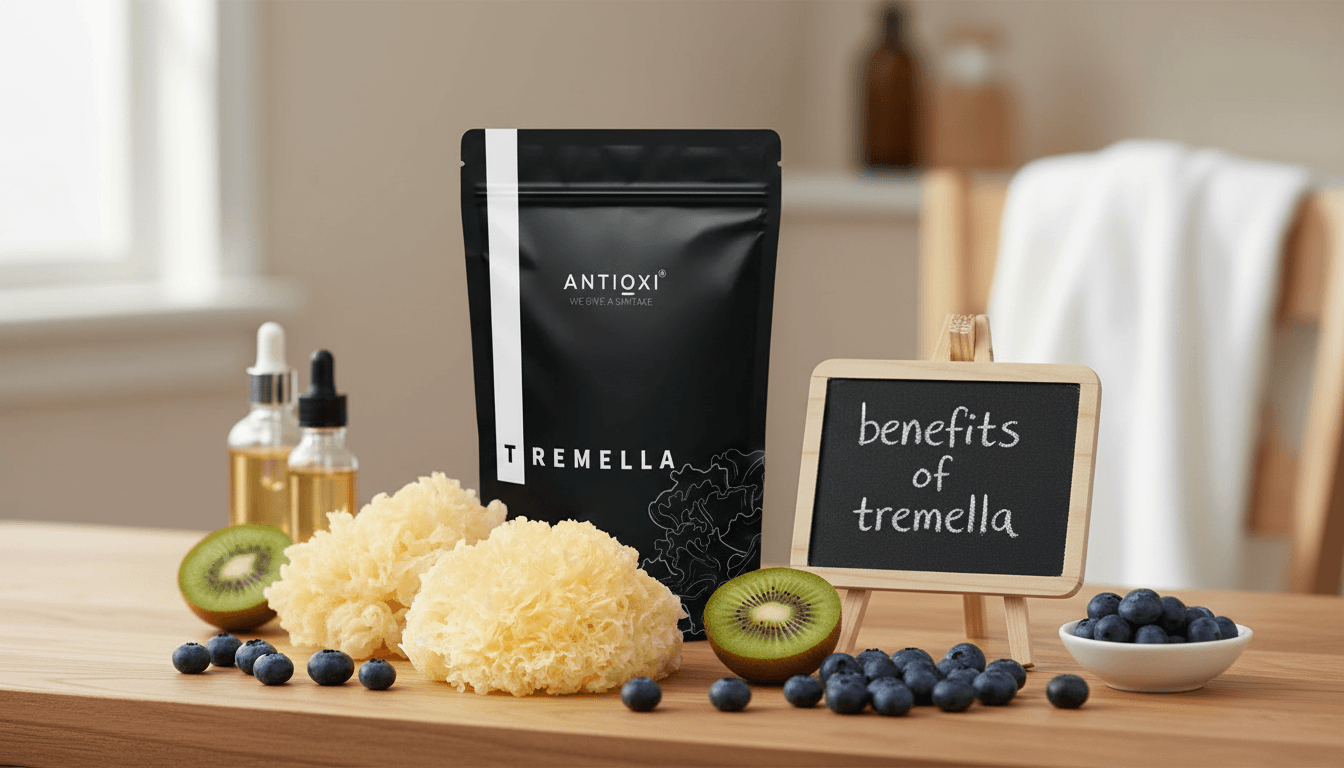
Tremella (Tremella fuciformis)
Dry Skin • Aging • Wound Healing • PIH
Known as the “Beauty Mushroom,” Tremella is famous for hydration. Its polysaccharides are smaller than hyaluronic acid, helping them penetrate more deeply. It also supports wound healing, collagen synthesis, and post-inflammatory pigmentation recovery.
Turkey Tail (Trametes versicolor)
Hyperpigmentation • Barrier Support • Brightening • Eczema
Turkey Tail combines barrier support with brightening potential. Its PSK and PSP compounds are linked to tyrosinase inhibition, microbiome support, collagen synthesis, and better barrier resilience without the harshness associated with many synthetic brightening agents.
Cordyceps (Cordyceps militaris)
Acne • Photoaging • Dry Skin • UV Protection
Cordyceps is particularly relevant for hormonal acne and photoaging. Research has associated it with anti-inflammatory, antioxidative, skin-whitening, anti-wrinkle, and sunscreen-like functions, with cordycepin playing a central role.
Best Mushrooms for Eczema (Atopic Dermatitis)
Eczema is a chronic inflammatory skin condition causing redness, intense itching, dryness, and flare cycles. It affects up to 20% of children and 3% of adults globally.
Eczema is driven by immune dysregulation, a compromised skin barrier, and chronic inflammation, all areas where medicinal mushrooms have demonstrated measurable effects.
A 2025 study confirmed that Ganoderma lucidum polysaccharides intervene directly in atopic dermatitis inflammatory pathways in mouse models, reducing inflammatory markers and improving barrier integrity. The anti-inflammatory, barrier-repairing, and immune-modulating properties of several mushrooms make them compelling complementary supports for eczema management.
Reishi (Ganoderma lucidum)
Top Pick for Eczema
Multiple clinical case studies have documented significant improvement in severe atopic dermatitis with Reishi supplementation. Its triterpenoids suppress NF-kB, the primary inflammation driver in eczema, while its beta-glucans help repair the damaged skin barrier. Reishi also modulates the Th2-skewed immune response characteristic of atopic dermatitis.
Chaga (Inonotus obliquus)
Barrier Repair & Soothing
Chaga’s betulinic acid has been specifically cited for eczema, psoriasis, and dermatitis. Its polysaccharides form a protective, hydrating film on damaged skin, helping reduce transepidermal water loss, a hallmark of eczema-compromised barriers.
Cordyceps (Cordyceps militaris)
Immune Modulation
A 2018 peer-reviewed study found that fermented Cordyceps militaris significantly inhibited inflammatory reactions and alleviated contact dermatitis. Its cordycepin compound helps reduce pro-inflammatory cytokines, while its adaptogenic profile may also support stress-triggered flare cycles.
Research highlight
A 2024 review specifically highlighted beta-glucan applications for atopic dermatitis management, supporting both barrier repair and immune normalisation. Beta-glucans in mushrooms activate Langerhans cells and macrophages, helping modulate immune responses in inflammatory skin conditions.
Best Mushrooms for Acne
Acne vulgaris remains the world’s most common skin condition. It affects around 85% of people aged 12–24 and a significant proportion of adults. It is driven by sebum overproduction, bacterial activity, inflammation, and hormonal imbalance.
Most mushroom benefits for acne work through three complementary mechanisms: anti-inflammatory action that reduces redness and swelling, antimicrobial activity that may help counter acne-associated bacteria, and hormonal and cortisol regulation that may help address excess sebum production.
This is part of what makes mushrooms appealing compared with harsher conventional approaches that often dry or irritate the skin.
Reishi (Ganoderma lucidum)
Top Pick for Acne
Reishi helps strengthen the skin’s immune defences against acne-related bacteria while also reducing the severity of inflammatory lesions. Its hormone-regulating properties may help reduce androgen-driven sebum overproduction without the dryness often associated with benzoyl peroxide or salicylic acid.
Cordyceps (Cordyceps militaris)
Hormonal & Cortisol Balance
Cordyceps is particularly relevant for stress-triggered and hormonal acne because it acts as an adaptogen. By helping regulate cortisol and related hormone dynamics, it may support one of acne’s most common internal triggers while also offering anti-inflammatory benefits.
Shiitake (Lentinula edodes)
Post-Acne Dark Spots
Shiitake supports active breakouts through antioxidant and anti-inflammatory activity, but it is especially useful after breakouts heal. Its naturally occurring kojic acid may help fade post-inflammatory hyperpigmentation and acne marks while supporting a clearer-looking complexion over time.
Adaptogen advantage
When adaptogenic mushrooms such as Reishi and Cordyceps help regulate stress hormones like cortisol, they may reduce one of acne’s strongest flare triggers. Psychological stress is closely associated with increased sebum output and inflammatory breakouts.
Best Mushrooms for Psoriasis
Psoriasis is an autoimmune condition that causes the rapid buildup of skin cells, forming scales and red, itchy plaques. It affects approximately 2–3% of the global population and has no permanent cure.
Psoriasis has a chronic inflammatory core. Reishi triterpenoids suppress NF-kB activation and inhibit pro-inflammatory cytokines such as TNF-alpha, IL-6, and IL-17, the same cytokines targeted by some biologic therapies. While mushrooms are not substitutes for prescribed psoriasis treatment, their complementary role in reducing inflammatory burden and supporting barrier integrity is meaningful.
Reishi (Ganoderma lucidum)
Top Pick for Psoriasis
Reishi’s triterpenoids specifically modulate the NF-kB inflammatory pathway implicated in psoriasis plaque formation. Its immune-modulating, rather than bluntly immune-suppressing, activity is part of what makes it so interesting as a complementary support.
Chaga (Inonotus obliquus)
Barrier & Tissue Repair
Betulinic acid in Chaga has been specifically referenced for psoriasis and dermatitis. Chaga’s antioxidant content helps counter the elevated reactive oxygen species associated with psoriatic skin, while its polysaccharides support barrier reconstruction.
Turkey Tail (Trametes versicolor)
Immune Balance
Turkey Tail’s PSK and PSP compounds are well-established immune modulators. In psoriasis, its ability to help normalise immune signalling while also supporting the skin barrier makes it especially relevant.
Important note
Psoriasis is a serious autoimmune condition requiring medical supervision. Mushroom supplements should be discussed with a dermatologist or rheumatologist before use, especially if you are taking biologics or immunosuppressants.
Best Mushrooms for Hyperpigmentation & Dark Spots
Hyperpigmentation includes melasma, post-inflammatory hyperpigmentation, sun damage, and age spots. It is driven by excess melanin production via the tyrosinase enzyme.
This is one of the strongest areas in mushroom skin research. Multiple mushroom species have demonstrated measurable tyrosinase inhibition. The 2025 review in Archives of Dermatological Research confirmed that Agaricus bisporus, Phellinus baumii, Ganoderma species, Flammulina velutipes, and Hypsizygus ulmarius all show dose-dependent tyrosinase inhibition. These compounds may work by binding to the enzyme’s active site and reducing melanin synthesis.
Shiitake (Lentinula edodes)
Top Pick: Kojic Acid Brightening
Shiitake is the most clinically recognised mushroom for hyperpigmentation because it naturally contains kojic acid, one of the best-known natural tyrosinase inhibitors in dermatology. It may help lighten areas of pigmentation and brighten the overall complexion while also protecting pigment-producing cells from UV stress.
Reishi (Ganoderma lucidum)
Dual-Action Brightening
Reishi supports brightening from two angles: tyrosinase inhibition and antioxidant defence. Its ganoderic acids may help reduce melanin concentration while also supporting skin regeneration that gradually helps fade acne marks and dark spots.
Tremella (Tremella fuciformis)
Post-Inflammatory PIH
Tremella polysaccharides stimulate tissue cell migration, a key part of wound healing, and have been shown to reduce melanin content in treated cells. That makes Tremella particularly relevant for post-inflammatory marks left behind after acne, eczema, or irritation.
Turkey Tail (Trametes versicolor)
Barrier-Protective Brightening
Turkey Tail is a proven tyrosinase inhibitor that also helps reinforce the skin barrier. Unlike many brightening approaches that can compromise sensitive skin, Turkey Tail offers a more barrier-conscious route to improved tone and luminosity.
Best Mushrooms for Aging Skin & Photoaging
Visible skin aging is driven by collagen degradation, elastin breakdown, oxidative stress, glycation, UV damage, and declining hyaluronic acid. These changes often begin in the late 20s and accelerate with cumulative sun exposure.
A 2024 review in the Journal of Fungi confirmed that mushroom bioactive compounds demonstrate antioxidant, anti-wrinkle, and anti-aging properties. A companion 2024 review analysing 52 scientific publications on macrofungal anti-aging effects confirmed their ability to moisturise skin, inhibit skin aging, relieve inflammation, and support pigmentation management. Inhibition of elastase, hyaluronidase, and collagenase is especially important here because these are the enzymes that degrade skin structure over time.
Tremella (Tremella fuciformis)
Top Pick: Deep Hydration & Collagen
Tremella is the standout mushroom for anti-aging hydration. Its polysaccharides are smaller than hyaluronic acid molecules and may penetrate more deeply while attracting and binding water. In a comparative study, Tremella retained 65.7% hydration after 9 hours, and it may also help stimulate collagen production and skin renewal.
Chaga (Inonotus obliquus)
Antioxidant Protection & UV Defence
Chaga’s superoxide dismutase, polyphenols, and melanin-like compounds help neutralise free radicals that damage collagen, DNA, and structural proteins. The 2025 review also highlighted Chaga’s ability to decrease MMP-1 protein production in UVA-exposed skin fibroblasts.
Shiitake (Lentinula edodes)
Cell Renewal & Anti-Glycation
Shiitake’s ergothioneine helps scavenge free radicals at the mitochondrial level, while lentinan supports cellular renewal and collagen and elastin production. It also appears relevant for glycation, a major but often overlooked driver of visible skin aging.
Cordyceps (Cordyceps militaris)
UV Protection & Photoaging
A 2018 dermatology study found that Cordyceps extracts demonstrate photoprotective and anti-collagenase activity with SPF-like protection up to factor 25. It also supports collagen and elastin production and may help the skin retain moisture under dry or cold conditions.
The glycation factor
Glycation, where sugar molecules bind to collagen fibres and make them stiff and easier to break down, is one of the least-discussed drivers of skin aging.
Shiitake’s anti-glycation relevance, combined with the antioxidant effects of Chaga and Reishi, creates a broader anti-aging strategy than many single-ingredient cosmeceuticals.
How to Use Mushrooms for Skin: Topical vs. Internal
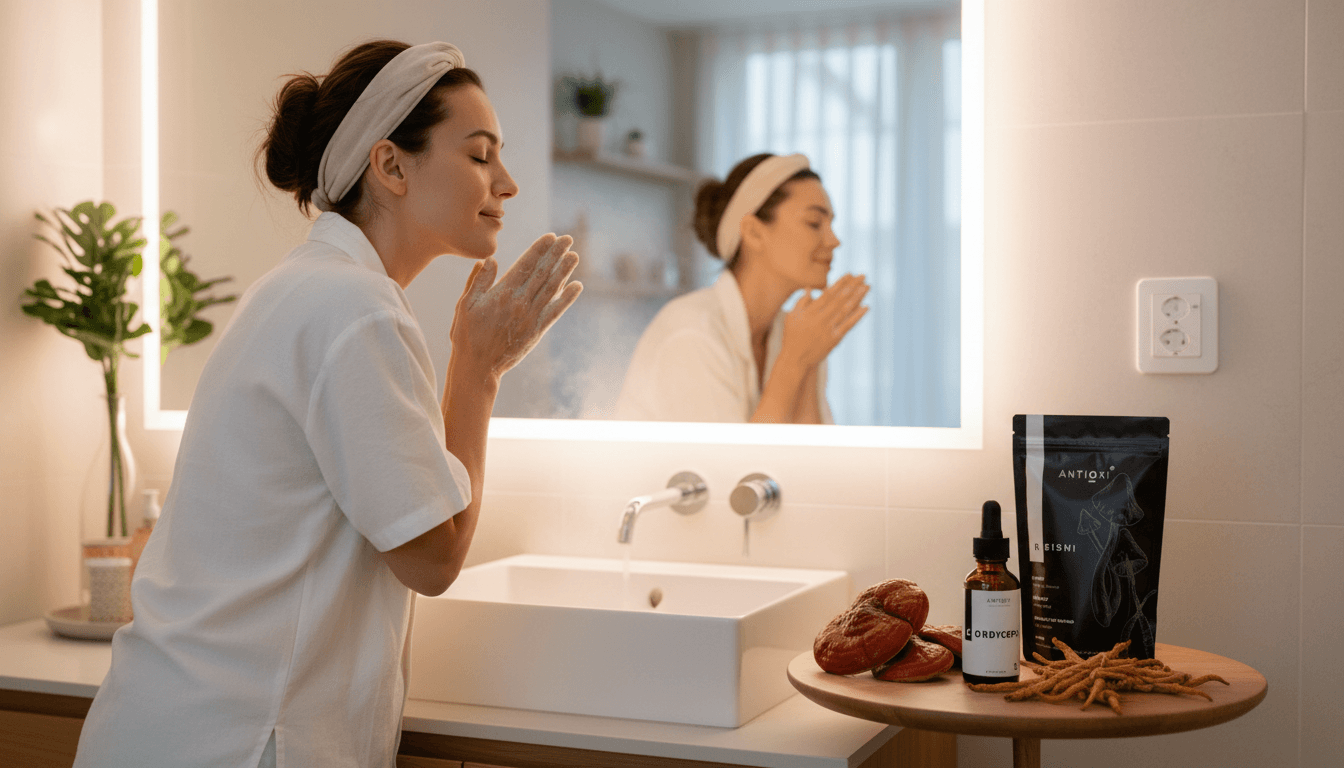
Medicinal mushrooms can support skin health through two complementary pathways. The most effective approach depends on the condition, and for chronic concerns a combined strategy often yields the best results.
Internal Supplementation (Oral)
Systemic support • Immune pathways • Gut-skin axis
Taking mushroom supplements orally works through systemic channels by modulating immune function, reducing whole-body inflammation, supporting gut health, and delivering antioxidants to skin cells from within.
Forms: Powder mixed into food or drink, capsules, and alcohol-free liquid extracts.
Typical dose: 1–3 g daily for general skin support, unless product guidance suggests otherwise.
Timeline: Internal effects on skin typically emerge after 4–8 weeks of consistent daily use.
Best for: Eczema, psoriasis, hormonal acne, and aging skin from within.
Topical Application (Cosmeceutical)
Targeted results • Faster surface response • Barrier care
Applied directly to skin in serums, creams, masks, and mists, mushroom extracts act at the level of the epidermis and upper dermis. Topical use is especially useful when the goal is faster surface-level improvement.
Serums & essences: Often the most effective delivery route for actives. Look for Shiitake, Reishi, or Tremella as lead ingredients.
Creams & moisturisers: Beta-glucan-rich Reishi or Chaga formulas for barrier repair and deep hydration.
Mists: Turkey Tail-based formulas for brightening and barrier reinforcement.
Best for: Hyperpigmentation, hydration, photoaging, redness reduction, and barrier repair.
Nutricosmetic synergy
The most exciting emerging approach is combining internal supplementation with topical application. Consuming Tremella or Reishi while also applying them topically may support skin through multiple pathways simultaneously. Even eating mushrooms as food can begin contributing internal skin benefits without requiring a dedicated topical product.
Continue Exploring
Explore more Antioxi resources on medicinal mushrooms, product quality, and practical supplement routines to build a skin-supportive plan that matches your goals.
Frequently Asked Questions
Choose your category
Best Mushrooms Overall
What is the single best mushroom for overall skin health?
Reishi (Ganoderma lucidum) is the most broadly beneficial mushroom for overall skin health. It addresses inflammation, hydration, collagen support, hyperpigmentation, barrier function, and immune regulation. Shiitake is the top pick for hyperpigmentation, and Tremella stands out for hydration and anti-aging. For broader support, a blend featuring two or more species may offer a more comprehensive spectrum than any single mushroom alone.
Eczema & Inflammation
Can mushrooms really help with eczema?
Yes, there is meaningful supportive evidence. Reishi has been documented in clinical case studies for severe atopic dermatitis, and a 2025 study confirmed that Ganoderma lucidum polysaccharides intervene directly in atopic dermatitis inflammatory pathways. Chaga’s betulinic acid has also been cited for eczema and dermatitis, while Cordyceps showed benefits in contact dermatitis research. These are not cures, but their mechanisms align with eczema’s core drivers.
Dark Spots & Brightening
Which mushroom is best for hyperpigmentation and dark spots?
Shiitake is the leading choice because it contains naturally occurring kojic acid, a well-known tyrosinase inhibitor used in dermatology as a gentler alternative to hydroquinone. Turkey Tail and Reishi also show tyrosinase-inhibiting activity, while Tremella is especially useful for post-inflammatory hyperpigmentation after acne or eczema.
Hydration & Tremella
Is Tremella mushroom really better than hyaluronic acid for hydration?
Tremella polysaccharides are smaller in molecular weight than hyaluronic acid, so they may penetrate more deeply instead of sitting primarily on the surface. In comparative research, Tremella retained 65.7% moisture after 9 hours. Its appeal is not just hydration, but also collagen support and post-inflammatory pigmentation relevance.
Psoriasis Safety
Can I use mushroom supplements if I have psoriasis?
Mushroom supplements may offer complementary support for psoriasis through anti-inflammatory and immune-modulating effects, but psoriasis is a serious autoimmune condition that still requires medical management. Always speak with your dermatologist or rheumatologist first, especially if you are taking biologics or other immune-altering medication.
Timing & Expectations
How long do mushroom supplements take to improve skin conditions?
Internal supplementation generally requires consistent daily use over 4–12 weeks before visible skin benefits emerge. Topical mushroom products may produce faster surface-level results, with Tremella-based hydration products sometimes showing benefits within days. Chronic issues such as eczema and psoriasis usually need a longer, more consistent trial.
Cautions
Are there any mushrooms that can worsen skin conditions?
Yes. Raw Shiitake mushrooms can cause shiitake dermatitis, a distinctive toxic reaction that appears as linear streaks on the skin due to lentinan in raw mushrooms. Proper cooking or commercial hot-water extraction eliminates this issue. Anyone with a mushroom allergy should avoid mushroom supplements and topical mushroom products.
References
- Rukhsar S et al. (2025). Mushrooms in modern cosmetics: unlocking anti-aging, antioxidant, and therapeutic potential. PubMed 40057933
- Kumar A et al. (2023). Potential of Mushrooms Bioactive for the Treatment of Skin Diseases and Disorders. DOI: 10.1155/2023/5915769
- Paterska M et al. (2024). Macrofungal Extracts as a Source of Bioactive Compounds for Cosmetical Anti-Aging Therapy. PMC11356820
- Luo J et al. (2024). Unlocking the Power: New Insights into the Anti-Aging Properties of Mushrooms. PMC10970926
- Zhang D et al. (2025). Study on the intervention mechanism of Ganoderma lucidum polysaccharides in mice with atopic dermatitis. ScienceDirect
- Honjo M, Kuwabara M. (2015). Useful treatment of severe atopic dermatitis with Ganoderma lucidum: A multiple-case study. PDF
- Kwon HK et al. (2018). Pediococcus pentosaceus-Fermented Cordyceps militaris Inhibits Inflammatory Reactions and Alleviates Contact Dermatitis. International Journal of Molecular Sciences
- Antioxi Supplements (2025). Best Medicinal Mushrooms for Eczema; Best Mushrooms for Your Skin. Antioxi
- Amaral AR et al. (2024). Beta-Glucans Application for Skin Disease, Osteoarthritis, and Inflammatory Bowel Disease Management. Microorganisms 12(6):1071


Leave a comment
All comments are moderated before being published.
This site is protected by hCaptcha and the hCaptcha Privacy Policy and Terms of Service apply.